






Mumbai, Feb 1 (PTI) Shipping and logistics industry on Sunday said the Union Budget 2026-27 presents a comprehensive and forward-looking macro framework that addresses near-term growth priorities while
signalling a long-term structural overhaul of the economy, firmly anchoring India's journey towards Viksit Bharat.
"The government's six-point intervention plan in the areas of manufacturing, MSMEs, infrastructure, security, and city economic regions provides the foundation for a more inclusive, resilient, and future-ready economy," Shashi Kiran Shetty, Founder and Chairman of logistics operator Allcargo Group, said.
The sustained focus on infrastructure development, with a proposed public sector capital expenditure of Rs 12.2 lakh crore in FY27, reiterates the importance of logistics as a growth driver in India's development journey, he said.
Schemes such as the development of new national waterways, the coastal cargo scheme, ship repair ecosystems for inland waterways, and the proposed East-West dedicated freight corridor will greatly enhance the multi-modal connectivity and cargo productivity, and help lower logistics costs, Shetty said.
Also, initiatives such as the Infrastructure Risk Guarantee Fund will further increase investor and lender confidence, leading to faster implementation of large-scale projects, he said.
Describing the 2027-2027 Union Budget as "decisive and forward-looking that firmly positions infrastructure as the foundation of India's growth", JSW Infrastructure Ltd Joint Managing Director and CEO Rinkesh Roy said, "The thought-through push towards port modernisation, inland waterways, coastal shipping, and logistics corridors will make India competitive and marks a structural change".
The additional focus on expanding national waterways, strengthening east-coast connectivity, container manufacturing, and digitalisation of ports aligns closely with our vision of building integrated, port-led logistics ecosystems Creatin, he said.
Trade facilitation measures announced in the Union Budget mark a significant evolution in India's approach to global commerce, said R S Subramanian, Senior Vice President for South Asia at DHL Express.
A major highlight is the transition towards a fully digital, trust-based customs framework, he said, adding that several measures directly address long-standing pain points in cross-border trade.
The removal of value caps on courier exports and the simplification of duty structures significantly ease compliance, particularly for MSMEs and e-commerce exporters apart from individuals who were always perplexed and unhappy on different duty rates, he noted.
According to him, these steps will help expand India's footprint in global markets by removing procedural and value-related constraints.
Blue Dart Managing Director Balfour Manuel called the Budget a "decisive, action-oriented" roadmap that accelerates India's journey towards Viksit Bharat by aligning infrastructure expansion, manufacturing scale-up and trade facilitation with deeper global integration".
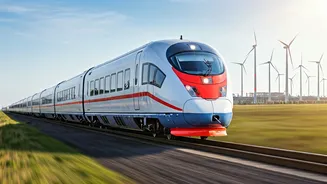
For the logistics sector, announcements around new dedicated freight corridors, waterways, high-speed rail connectivity and enhanced container manufacturing capacity are particularly significant, he said.
"These measures will strengthen multimodal integration, reduce transit variability, and structurally lower logistics costs, which are critical enablers for exports and stronger participation in global value chains."
Welcoming the FY27 Union Budget for its "strong, export-oriented vision" and its clear focus on building a world-class logistics ecosystem, Skyways Group CMD Yashpal Sharma said, "Emphasis on EXIM trade, through customs simplification, tariff rationalisation, and targeted duty exemptions for export-oriented sectors like seafood and MRO will significantly improve ease of doing business for exporters and freight players alike."
The removal of the Rs 10 lakh cap on courier exports is a major boost for MSMEs and startups, he said.
The courier-export reform will also boost air cargo volumes via express channels and support last-mile global reach for SMEs and startups' aligning with the Ministry of Civil Aviation's vision of scaling India's air cargo capacity from 3.7 MMT FY25 per annum to over 10 MMT in the coming years, creating a seamless, export-friendly logistics backbone, he noted.
"Budget 2026 reassures the government's continued focus on infrastructure-led growth and the importance of logistics as a key enabler of India's trade competitiveness," said Girish Aggarwal, Managing Director, APM Terminals Pipavav.
At a time of global uncertainty, the record public capital expenditure of Rs 12.2 lakh crore and the emphasis on integrated connectivity through freight corridors, coastal shipping, inland waterways, and port-led development provide a stable and confidence-building signal for the sector.
The Finance Minister's emphasis on keeping the 'Reform Express' firmly on track is clearly visible in these initiatives, as well as in the Rs 10,000-crore allocation for container manufacturing and the focus on sustainable cargo movement.
From an industry perspective, these measures will significantly improve connectivity, reduce transit times, lower logistics costs, and enable Indian ports to operate with greater efficiency, reliability, and scale, he added. PTI IAS TRB