



New Delhi, Feb 2 (PTI) Car market leader Maruti Suzuki India will consider increasing prices of its vehicles due to rising commodity costs, amid strong demand in the market post GST rate reductions, company
Senior Executive Officer, Marketing and Sales, Partho Banerjee said on Monday.
The company currently has 1.75 lakh pending orders due to production constraints, and in January alone, it received 2.78 lakh bookings, he told reporters in a virtual conference.
"On the commodity front, prices are going up. (In) precious metals, the increase is phenomenal, but we are keeping a very close watch due to the geopolitical scenario also... but yes, in times to come, we are going to review the price increase," Banerjee said.
He was responding to a query on possible price hikes in the near future due to the rise in commodity prices, which has escalated input costs.
"Our endeavor being a market leader, has always been to minimise the cost increase to our customers. Our supply chain team, production team, and all are working to see how much we can absorb the cost increase due to commodities," he added.
Nevertheless, Banerjee said, "After a certain extent, if we are unable to somehow accommodate the cost increase, we need to pass it on to our customers."
While he did not share a timeline for the possible price hike, Banerjee said the company has initiated a "price protection scheme in January" for those who booked their vehicles as it could not supply.
"We were seeing first-time customers, who are coming to the four-wheeler segment, and we need to give them the opportunity to upgrade. Hence, we have given a price protection scheme (for those who have booked their vehicles)... There will be no price increase (for those customers)," Banerjee said.
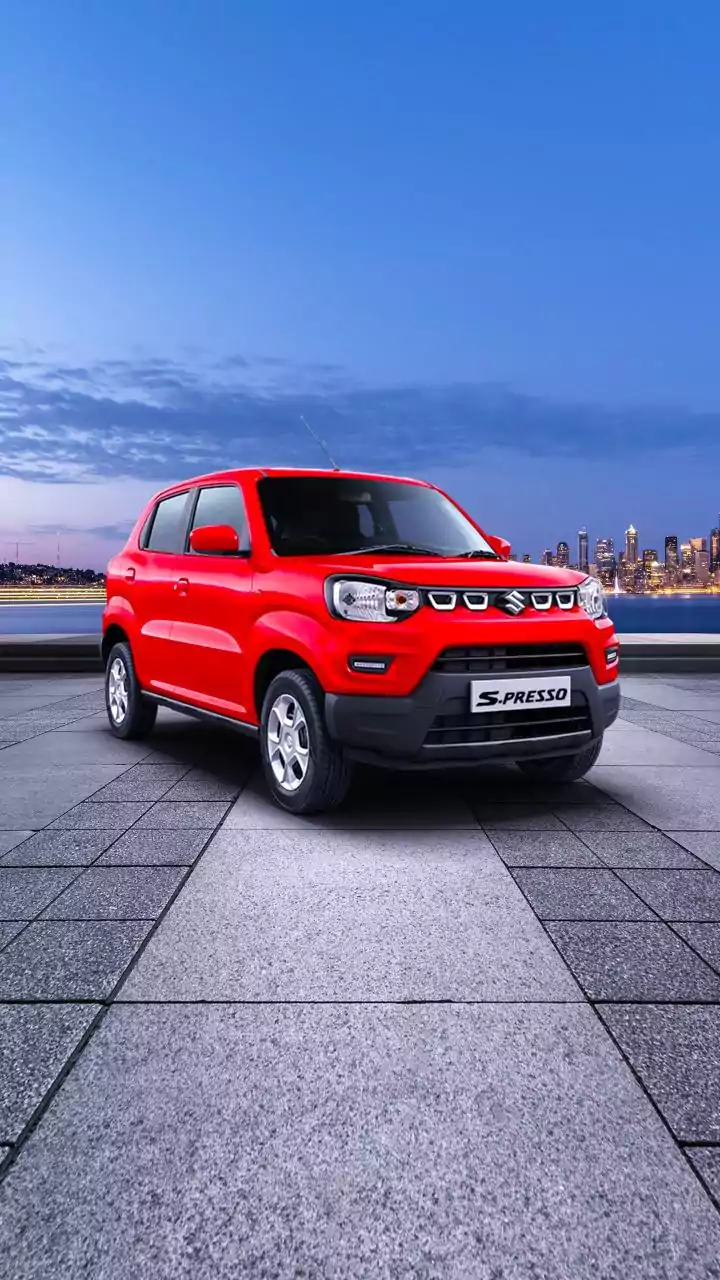
Last year in September, after GST 2.0 kicked in, the company had cut prices of entry-level model S Presso by up to Rs 1,29,600; Alto K10 by up to Rs 1,07,600; Celerio by Rs 94,100 and Wagon-R by up to Rs 79,600, among others.
When asked about the outlook for the passenger vehicle industry in the backdrop of the current circumstance, he said, "The auto industry should again go back to a CAGR of 6-7 per cent. However, seeing the commodity prices, which are right now shooting up very high, we need to wait and watch how the geopolitical scenario happens, then maybe a better forecast can be given."
Banerjee, however, said that on the back of GST 2.0 reform, which gave a boost to the auto industry and the Union Budget 2026-27 announcement of further spending on capex in infrastructure is "really going to boost the auto industry".
Reflecting on January sales, Banerjee said the company posted its highest-ever monthly total sales of 2,36,963 units.
"We got bookings of over 2.78 lakh units, a 25 per cent y-o-y growth... that market is giving us around 9,000 to 10,000 bookings every day," Banerjee noted.
He said the company's exports also reached an all-time monthly high of 51,020 units in January.
The company's newly launched SUV VICTORIS achieved a milestone of 50,000 units in 5 months, Banerjee noted.
On the production constraints, he said the company will have to manage for a few more months till new capacities are available.
Maruti Suzuki India's second plant at the Kharkhoda facility in Haryana is scheduled to be operational by April 2026, which will soon be followed by the commissioning of the fourth line at the company's existing facility in Gujarat, providing a total additional capacity of 5 lakh units annually.
On the launch of e VITARA in the domestic market, he said the electric SUV will hit the market this month, and already dispatches have started. PTI RKL DRR