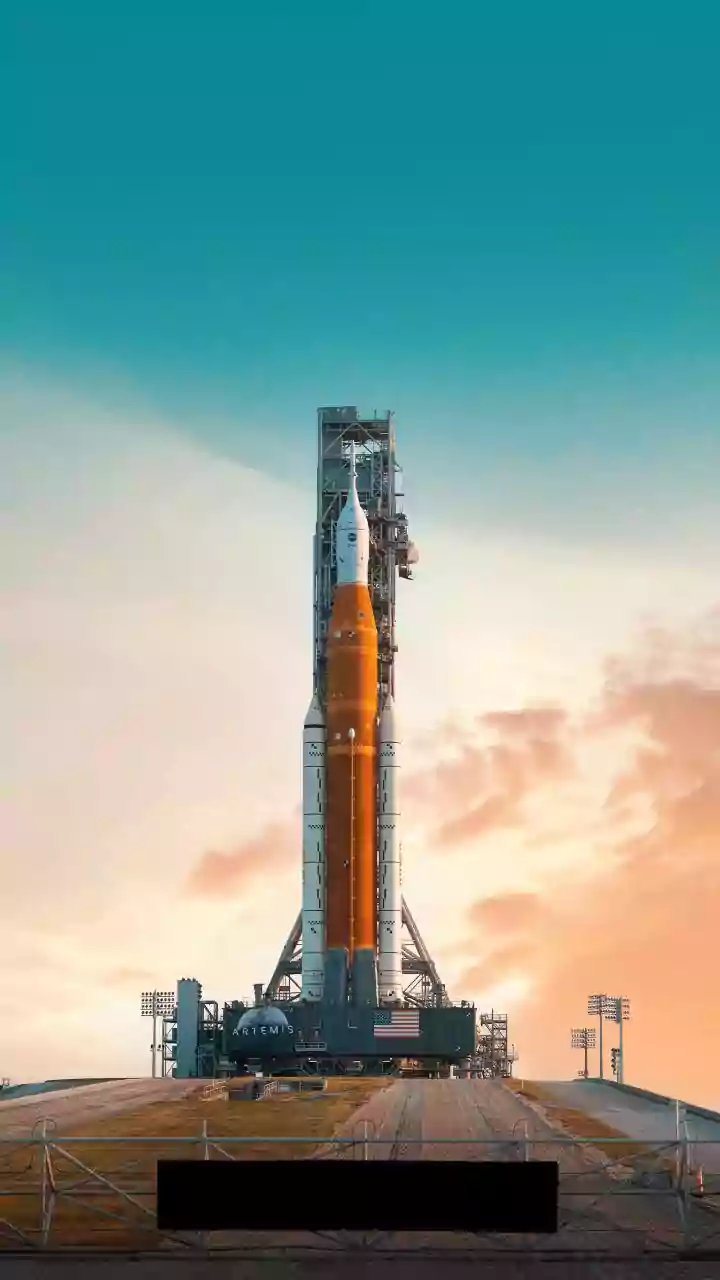

Sriharikota (Andhra Pradesh), Dec 24 (PTI) The successful launch of the Bluebird Block-2 satellite onboard an LVM3-M6 rocket has enhanced confidence in India's human spaceflight programme, Gaganyaan, ISRO
Chairman V Narayanan said on Wednesday.
He emphasised the critical role of launch vehicle LVM3, which would be used for the ambitious Gaganyaan programme, the mission to send Indian astronauts to orbit and bring them safely back to earth.
Addressing reporters, Narayanan said, "Today, it is a very important mission for us. Because you all know this is the vehicle which is human-rated and identified for the Gaganyaan programme for India. So, with 9 consecutive successful LVM3 launches, it improves our confidence in the Gaganyaan programme. It is also the mandated requirement."
Listing highlights of the LVM3-Bluebird Block-2 mission, he said, the placing of Bluebird-Block-2 satellite precisely into the intended orbit is the best accuracy so far achieved ever on Indian soil.
According to him, the LVM3 vehicle demonstrated one hundred per cent reliability.
"Today's launch is also another important one. It is the heaviest satellite to be launched from Indian soil. That has been accomplished today. Close to 6,000 kg, to be precise 5,908 kg, that is the heaviest satellite ever launched from Indian soil and we have achieved it in this mission."
Highlighting the accuracy of the launch, Narayanan, also the Secretary, Department of Space, said, "We targeted a 520 km circular orbit. We have placed the satellite at 518.5 km altitude, which is 1.5 km less than the target."
"It is one of the best launches made anywhere in the world. And this is the best accuracy so far achieved from the Indian launchers also," he said.
On Wednesday's mission, ISRO introduced a technological improvement to enhance the performance of LVM3 rocket and increase its payload capability, the Chairman said.
"Today, one of the improvements we have done is the S200 solid motor control system (which are located on the side of the LVM3 rocket providing the thrust for lift-off). Earlier, we used to have electro-hydro actuator, which is a very complex system in the S200. For the first time, India has developed a very high powerful electro-mechanical actuator to improve the payload capability of the vehicle approximately by 150 kg," he said.
Mission Director T Victor Joseph noted that LVM3-M6 launch was achieved in a very remarkable short time frame.
"For the first time, we are having back-to-back LVM3 missions within 52 days and that required a large amount of synchronisation with multiple centres."
"With additional technologies, we have demonstrated that ISRO is in much better shape for future missions, including the Gaganyaan Mission," he said.
In response to a query on the one-minute delay in lift-off, Narayanan explained that scientists continuously monitor the path of the rocket and the satellite. "If any space debris is expected we correct the timing. Every country does that depending upon the orbit requirement."
Acting Chairman and Managing Director of NewSpace India Ltd, which is the commercial arm of ISRO, P Mohan pointed to increasing global interest in LVM3.
"With nine successive, successful launches of LVM3 vehicle, the demand for LVM3 rockets is increasing with six to 10 missions planned in the future... many of the global companies have requested up to six launches of LVM3 per year from 2026-27 onwards..."
"NSIL is standing on the shoulders of the Department of Space and so thanks to ISRO chairman for giving us this opportunity and allowing us to be the interface between NewSpace India Ltd and AST SpaceMobile from the USA," he added. PTI VIJ ROH