






New Delhi, Mar 19 (PTI) More than a week after commercial LPG supply crunch hit the capital, restaurants and street food vendors are still struggling to resume full operations, with many operating for
reduced working hours and serving a curtailed menu, while also reporting sharp losses.
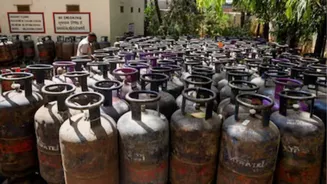
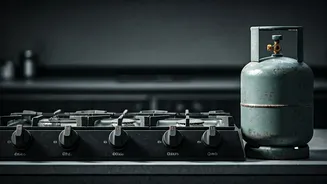
Operators said while there has been some improvement, access to commercial LPG cylinders remains inconsistent, forcing eateries to cut down menus, reduce working hours and limit cooking to bulk preparation.
"Over the past 10 days, business has taken a severe hit. Earlier, our average daily billing across branches was around Rs 3 lakh, but it has now dropped drastically to just about Rs 25,000 to Rs 30,000," a representative of the Tadka Rani restaurant chain said.
He added that they are currently serving barely 20 per cent of their menu, with portions standardised and only bulk preparations being made, while working hours have also been impacted due to operational constraints.
"Managing operations has become extremely difficult, especially with electrical equipment heating up quickly and limited availability of resources. We are trying to gradually resume some items depending on how the situation improves," the representative said.
He said initially, the outlets had to be shut down completely, and even now, operations remain highly restricted, with losses mounting every day.
The disruption in commercial LPG supply follows a recent government revision in priority allocation of domestically produced natural gas amid broader energy security concerns in the wake of deepening conflict in West Asia.
"Most restaurants are now functioning in a restricted manner, cooking only limited items in bulk, and not continuously. It is no longer possible to operate at full capacity," a Shahdara-based restaurant owner said.
He further said during Navratri, footfall is expected to dip further, worsening already reduced earnings, and many are incurring significant losses.
"While the situation has shown slight improvement, disruptions persist. Many restaurants are still struggling to function normally," National Restaurant Association of India (NRAI) Treasurer Manpreet Singh said.
He said several establishments are partially open, some operating only on certain days depending on availability of cylinders, while others remain shut intermittently, with uncertainty looming on the entire sector.
"This week, we could open our restaurant for only two days. For the rest of the week, we had to remain shut due to lack of resources," an east Delhi restaurant owner said.
He further said many establishments are resorting to unsafe practices such as open fire in enclosed spaces just to keep operations running.
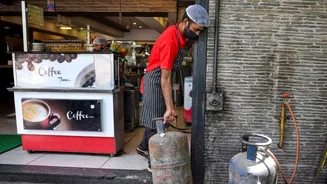
Street vendors too are reeling under the crisis. "I am forced to shut my stall on most days. I can only operate when I somehow manage to procure a cylinder," Iqbal, a tea vendor in south Delhi said.
He said it has become extremely difficult to manage daily expenses and support a family due to lack of steady income.
"We are not getting commercial cylinders at all. If we try to work using domestic cylinders, there is the fear of action by authorities," said another vendor who sells samosa and chaat for a living.
He said officials from civic agencies and police often take action if domestic cylinders are used in street food stalls, leading to much stress and uncertainty.
"Workers and small vendors are unable to access commercial cylinders. Many are being forced to procure domestic cylinders from the black market, which is both risky and expensive," Sandeep from the Indian Workers Alliance said.
"Even then, they cannot use them freely due to restrictions and fear of penalties, creating a serious livelihood crisis for thousands dependent on the sector," he added. PTI SGV ARB
ARB