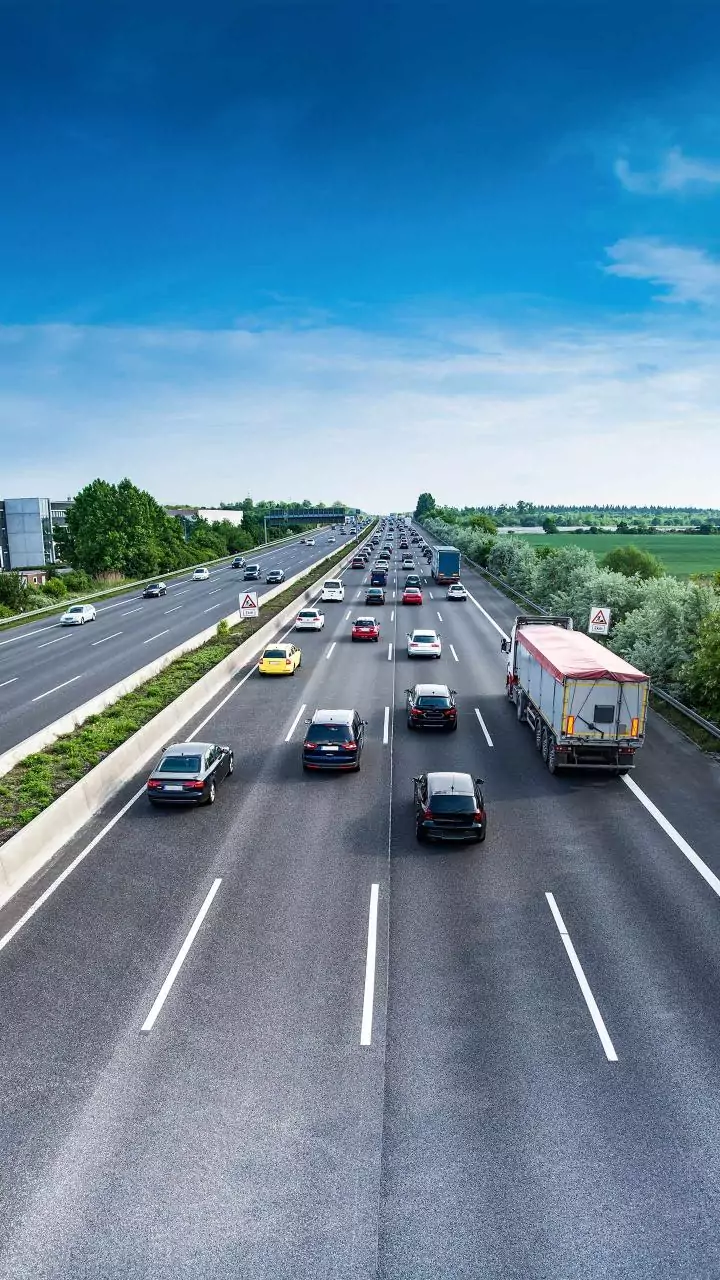

Davos, Jan 19 (PTI) With chances of people getting killed or injured being several times higher than other modes of transport, an Indian expert on road safety has underlined that safe mobility would be key
to realising the 'Viksit Bharat' goal, and there is a huge potential for a 'Make in India' model of tackling road crashes for the Global South.
He said there are good samaritan laws in the Western world also, but those might not work in other countries, as cultural empathy is a key component on whether these regulations work or not.
Speaking to PTI during the World Economic Forum Annual Meeting here, SaveLife Foundation's founder and CEO Piyush Tewari said road safety should be a big part of the conversation because mobility gives us access to our most basic rights to health, education and all the other key development indicators that are so much a part of the Viksit Bharat 2047 mission.
Tewari, who started working in the area of road safety after losing a young family member in a road crash in 2007, and went on to play a key role in framing India's Good Samaritan law, said a lot of families are affected by this on a daily basis.
"When I started working in this area way back in 2007, I realised that something had to be done at a systemic level, not just at a behaviour level, to fix the issues that were causing such a large number of deaths.
"And that's how the journey began. We first focused on the Good Samaritan law and then focused on applying the best practices on the ground by creating zero fatality corridors and zero fatality districts," he said.
"And what we're really trying to do here at Davos this time is to show that there is a model for safer roads that is not coming from the West but coming from the Global South" he said.
This is the model that demonstrates what the lived realities in our countries are and how the solutions ought to be designed for the people that are most affected," he explained.
He said the biggest differentiator is the application of what we call cultural empathy, which is that you have to recognise what works in countries like India.
He said there are Good Samaritan laws also in Western countries, including in France, for example, where if you don't help someone, there is a penalty for it.
"But in India, the challenge was not that there should be a penalty; the challenge was that to help, there was a penalty. You know, people get entangled in legal hassles," he said.
"We realised that we didn't have to threaten them with a penalty. We had to insulate them. We had to create a conducive environment for them," he said.
"Similarly, when we talk about actual road safety on the ground, we have to understand that there are on-ground realities of people who live alongside highways and the most vulnerable road users.
There are pedestrians, cyclists, public transport users, not by choice, but often by compulsion because they simply don't have access to safer modes of transport," he said.
Tewari said they wanted to design solutions that work on the ground, and their work on various highways in India, including the Mumbai-Pune Expressway, the Yamuna Expressway, various districts like Nagpur, Unnao in UP, and now 100 other districts across the country, is demonstrating that it works better when you work at a hyper-local level.
"When you work with the lived realities of people, you are able to create change on the ground. And we are hoping that we are able to scale that effort across the country in India, but also perhaps make this a Make in India solution to other low- and middle-income countries that are suffering," he said.
Talking about the economic importance of road safety, he cited the World Bank data that India loses anywhere from 3-5 per cent of its GDP every year because of road crashes alone.
We are talking about nearly USD 100 billion of economic loss that can be prevented if we make our roads safer, be said.
The other important aspect besides the GDP loss, he said, is the fact that about 64 per cent of those who are killed in India and other low- and middle-income countries in road crashes come from extremely vulnerable economic backgrounds, he said.
"They are people who are just emerging out of poverty. And the moment they have a crash in their family, it almost strikes them like a bullet, and they fall back into the grip of poverty because the breadwinner is killed or the breadwinner is maimed in these accidents," he said.
Since the low-income households are most drastically affected by this issue, it is even more important to discuss it here at WEF, he underlined.
"We have to make sure that a major contributor to poverty in the Global South, which is road crashes, is brought into the centre of the conversation with regard to safe mobility and development in these countries," he said.
Sharing further data points, he said road crashes contribute more fatalities than TB and malaria put together, which is TB, malaria and HIV put together in the case of India.
"So we also have a significant public health burden that is happening because of road crashes.
"Also, chances of getting injured in a road crash or losing a life in a road crash are nearly 20-30 times more than most other modes of transport, and it is much higher in comparison to air transport.
"It also ends up being an equity issue of who is getting access to safer roads or safer mobility. Is it just the people who have the ability to purchase the safest cars or the safest modes of transport?" he asked. PTI BJ HVA