







Betul (Goa), Jan 27 (PTI) India sits at the heart of the world's fastest and most complex phase of energy demand growth, driven by emerging markets, artificial intelligence and the large-scale transformation
of energy systems, UAE Minister SultanAhmed Al Jaber said on Tuesday.
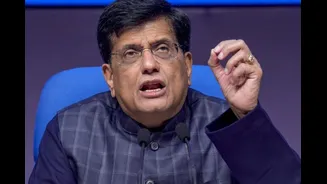
Delivering the keynote address at India Energy Week 2026, the Minister of Industry and Advanced Technology of the UAE and Managing Director and CEO of ADNOC said India, as the world's third-largest energy consumer, has become a decisive force shaping global demand.
Over the next 15 years, air travel in India is expected to grow 150 per cent, urban population will approach one billion, and data centre capacity will expand ten-fold.
Al Jaber said the current volatility in global energy markets masks a far bigger structural shift, one that rewards decisive action rather than caution.
"Behind the current turbulence is a bigger picture of transformation at scale," he said. "And transformation rewards those who move boldly, not those who wait for calm seas."
The minister said three megatrends are reshaping global energy markets: the rise of emerging economies led by Asia and India, the exponential growth of AI and digital infrastructure, and the integration of multiple energy sources rather than reliance on a single solution.
Together, these forces are driving the largest expansion of energy demand in history, he said.
Between now and 2040, global oil demand will remain above 100 million barrels per day, LNG demand will rise more than 50 per cent, and electricity demand will also grow by 50 per cent.
Beyond AI and data centres, Al Jaber highlighted rising demand for cooling as a major driver of future power consumption. By 2050, the number of air conditioners globally is expected to rise to 5.6 billion, from 1.6 billion today, equivalent to selling 10 new units every second for the next 30 years.
"Demand at this scale and pace requires investment in all forms of energy," he said, warning that the biggest risk facing the global system is underinvestment, not oversupply.
India "does not progress in increments, it goes for quantum leaps," adding that growth at this scale requires strategic, long-term and trust-based partnerships.
Al Jaber said the UAE-India relationship exemplifies such a partnership. Bilateral trade crossed USD 100 billion last year, spanning sectors, including energy, infrastructure, technology, and logistics.
Earlier this month, UAE President Sheikh Mohamed bin Zayed Al Nahyan and Prime Minister Narendra Modi agreed to double trade to USD 200 billion by 2032.
In energy, he said ADNOC remains a trusted supplier as India increases crude intake for its refineries, expands natural gas in its energy mix and transitions households to cleaner fuels.
"As India aims to double natural gas in its energy mix, we have made this nation our number one market for LNG," he said, adding that ADNOC is already India's largest supplier of LPG and will continue supplying feedstocks for petrochemicals and industry.
Al Jaber also highlighted ADNOC's investments in India's clean energy build-out, including participation across 11 gigawatts of solar, wind and storage capacity through its global climate investment platform Alterra.
Addressing ADNOC's global strategy, he said the company has launched XRG, a new platform aimed at value creation and long-term resilience, expanding gas portfolios across Asia, Africa and the Americas, building a global chemicals platform through Borouge, NOVA and Covestro, and investing in energy infrastructure to support digital and industrial growth.
He said ADNOC is also redefining what a 21st century energy company looks like by embedding AI at its core. Agentic AI systems now monitor every well in real time, predicting failures and optimising production, supported by more than 200 AI tools and 65 robotic applications.
"These deployments have cut unplanned shutdowns in half, boosted performance and reinforced resilience," he said.
"This is not a pilot programme. This is how we operate."
Al Jaber said reliable partnerships are the "real strategic reserves" in an era of constant change, pointing to the UAE's long-standing commitment to open trade, open ports and open skies.
In the past three years, the UAE has activated 35 comprehensive economic partnership agreements, starting with India, and attracted more than USD 45 billion in strategic foreign direct investment last year. Today, over half of all investment into the Middle East flows through the UAE, he said.
"If you are an investor seeking predictable returns, look to the UAE," Al Jaber said. "If good governance and the rule of law are essential, you will find them in the UAE."
Calling for deeper collaboration between India, the UAE and global partners, he said, "In an age of walls, our message is simple: build doors, and the world will walk through them." PTI ANZ TRB