
New Delhi, Feb 1 (PTI) The seven high-speed rail corridors and one dedicated freight corridor announced in the Union Budget 2026–27 will prove to be a boon for people and transform the country’s transportation
sector, Railway Minister Ashwini Vaishnaw said on Sunday.
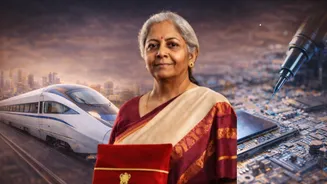
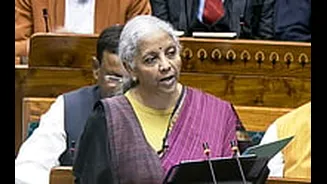
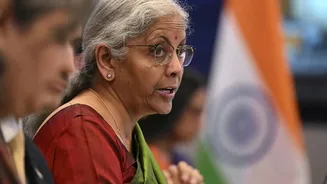
Finance Minister Nirmala Sitharaman, in the Budget 2026–27, proposed seven high-speed corridors connecting major cities, along with a new dedicated freight corridor between Dankuni in West Bengal and Surat in Gujarat.
According to Sitharaman, the proposed high-speed corridors will be developed between Mumbai–Pune, Pune–Hyderabad, Hyderabad–Bengaluru, Hyderabad–Chennai, Chennai–Bengaluru, Delhi–Varanasi and Varanasi–Siliguri.
Addressing mediapersons, Vaishnaw said the finance minister announced budgetary support of Rs 2.78 lakh crore and a total capital expenditure of Rs 2.93 lakh crore for the railways. Of this, Rs 1.20 lakh crore will be invested in improving passenger and operational safety.
“Railways have a huge focus on safety,” Vaishnaw said, adding that this focused approach has reduced train accidents by 95 per cent.
The minister stated that various railway departments will further strengthen safety measures through maintenance of tracks, locomotives, wagons and coaches, along with rapid installation of Kavach, CCTV cameras, overhead electrical equipment, and station redevelopment.
“Customer care and passenger facilities will be improved further,” Vaishnaw added.
Speaking about the seven new high-speed corridors announced in the budget, Vaishnaw said they would transform the transportation sector in the country. He provided an update on the first ongoing high-speed corridor between Mumbai and Ahmedabad, stating that rapid progress has been made.
According to Vaishnaw, the Chennai–Bengaluru–Hyderabad corridors will form a southern high-speed triangle, benefiting five states — Kerala, Karnataka, Andhra Pradesh, Tamil Nadu and Telangana — as well as the Union Territory of Puducherry.
He added that the travel time between Chennai–Bengaluru, Bengaluru–Hyderabad and Chennai–Hyderabad will be reduced to 1 hour 13 minutes, 2 hours, and 2 hours 55 minutes, respectively.
“These high-speed corridors will act as major growth multipliers, which is good for the country as well as for these states,” Vaishnaw said.
Talking about the Mumbai–Pune high-speed corridor, he stated that the travel time between the two cities would be reduced to just 48 minutes, while the Pune–Hyderabad corridor would cut travel time to 1 hour 55 minutes.
Providing details of high-speed corridors in north India, Vaishnaw said people would be able to travel between Delhi and Varanasi in just 3 hours 50 minutes.
“Further, from Varanasi via Patna, people can travel to Siliguri in only 2 hours 55 minutes,” he said.
He added that a new economic corridor would emerge across Delhi, Uttar Pradesh, Bihar and West Bengal, delivering significant benefits. All seven corridors will cover about 4,000 km and attract investments worth Rs 16,000 crore.
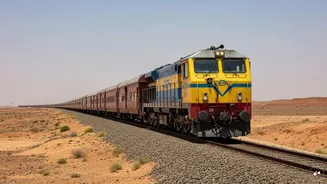
Vaishnaw also highlighted the benefits of the new dedicated freight corridor between West Bengal and Gujarat. He said the East–West Freight Corridor would be 2,052 km long and would connect with the existing Western Dedicated Freight Corridor in Gujarat.
Railway sector stakeholders said the budget reinforced railways as a central pillar of India’s infrastructure and logistics strategy.
“The announcement of seven high-speed rail corridors as ‘growth connectors’, along with a new Dedicated Freight Corridor between Dankuni and Surat, will significantly enhance passenger mobility, freight efficiency and regional economic integration,” said Sudipta Mukherjee, managing director, Texmaco Rail and Engineering.
“Overall, the budget creates a stable and forward-looking environment for technology-driven rail infrastructure companies focused on safety, reliability and indigenisation,” said Pradeep Khaitan, managing director of rail track manufacturing company Pandrol Rahee Technologies.
"This unprecedented investment reinforces railways as the backbone of India’s long-term mobility and logistics strategy," Gaurav Lath, joint managing director, Concord Control Systems Limited, said. PTI JP JP MNK
MNK