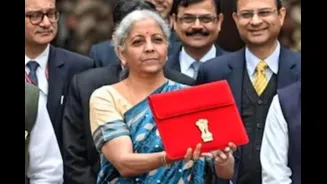








Indore/Bhopal (Madhya Pradesh): Shortly after Union Finance Minister Nirmala Sitharaman announced Budget 2026-27, reactions began to pour in. Some welcomed the move, calling it a 'pro-growth budget'; others
expressed disappointment about the middle class being left out alone.
In the same series, Dr S.M. Anas Iqbal, former economic consultant at the Planning Commission (NITI Aayog), New Delhi, shared his insights with the Free Press. He hailed it as one to drive job creation & innovation in the economy.
'Employment booster'
He said that the Union Budget 2026-27 placed a strong emphasis on education, skilling, and research, with large-scale initiatives across schools, higher education, and medical institutions.
The budget is designed to foster employment-led growth by stimulating sectors such as manufacturing, MSMEs, and innovation. It emphasised the importance of investing in people and the economy to drive job creation and economic stability.
"This budget outlines a clear roadmap for India’s continued progress, focusing on inclusivity, skill development, innovation, and infrastructure."
Dr Iqbal further added that the proposals in Budget 2026-27 reflect a strong focus on aligning education infrastructure with industrial growth, enhancing skill development, and expanding opportunities for women and young learners. These measures collectively aim to create a more skilled and inclusive workforce for India’s future growth.
The budget emphasises the initiatives that can help India emerge as a global leader in services, with a targeted 10 per cent share in global services trade by 2047. The government’s efforts to expand educational capacities, improve healthcare access, and support rural and agricultural development are key to realising the vision of a “Viksit Bharat”.