








Navi Mumbai: With the civic elections around the corner, Navi Mumbai’s youth are refusing to let environmental concerns be buried under election rhetoric.
Silent Human Chain Sends Powerful Message at Vashi
Mini Seashore
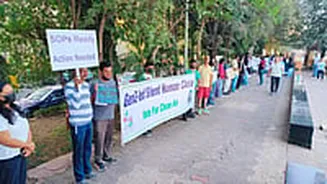
On Saturday morning, the Vashi Mini Seashore witnessed a striking sight a long, silent human chain of young citizens standing shoulder to shoulder, demanding one thing above all: the right to breathe clean air.
The initiative, organised by Urvari and the NatConnect Foundation, transformed the serene promenade into a symbol of civic responsibility and environmental awakening. While political parties prepare their manifestos, it was Gen Z that set the agenda insisting that air quality and public health must dominate campaign conversations.
“Clean air isn’t just an issue for environmentalists; it’s a survival issue,” said B N Kumar, Director of NatConnect Foundation. “Every voter should be asking candidates what they plan to do about air pollution. This can’t remain a side topic anymore.”
Placards, Participation, and Public Solidarity
Participants, many of them students and young professionals, carried evocative placards that read “Vote for Clean Air” and “Breathing is Injurious to Health.” They stood along the Sector 10-A seafront for nearly two hours, drawing the attention of joggers, morning walkers, and families who joined in solidarity.
Urvari Director Vasudhara Gupte said the event was not a protest but a statement of civic engagement. “We’re not here to oppose anyone, we’re here to remind everyone that public health is political,” she said. Volunteers have been monitoring air quality and reporting construction dust violations, while also collecting public signatures to strengthen accountability mechanisms.
Pollution Sources Identified Across Navi Mumbai
The organisers spotlighted multiple sources of pollution choking the city from reckless quarrying and RMC (ready-mix concrete) plants along the Uran–Panvel stretch, to unregulated construction dust and ageing diesel vehicles spewing smoke through residential zones.
Siya Gupta, Urvari’s coordinator, said the weakest link remains enforcement. “We have rules for dust and emissions, but they’re rarely implemented on the ground. Children, senior citizens, and asthma patients are paying the price.”
Scientists Advocate Urban Green Cover Solutions
The initiative also drew participation from environmental scientists. Dr. Vini Sandhu of the Indian Women Scientists Association called trees the “most affordable air purifiers” and urged authorities to adopt the 3-3-300 rule —ensuring every resident can see three trees from their home, lives within 300 metres of a green space, and that each neighbourhood maintains 30% tree canopy cover.
As the young participants dispersed, one slogan lingered in the salty morning air — “Clean air is not a privilege; it’s a promise every city must keep.”
By reclaiming the seafront for environmental dialogue, Navi Mumbai’s youth have made it clear: this election season, silence won’t be an option when it comes to the air they breathe.
To get details on exclusive and budget-friendly property deals in Mumbai & surrounding regions, do visit: https://budgetproperties.in/