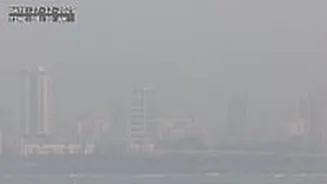









Mumbai: Mumbai witnessed a crisp and relatively cool start to Saturday, offering residents a brief break from the city’s usual humidity. Clear skies, mild winds and lower temperatures made the morning
pleasant, encouraging many to step outdoors during the early hours. According to the India Meteorological Department (IMD), the minimum temperature was expected to hover around 18°C, while the maximum could touch 33°C, making it one of the more comfortable winter days this season.
However, the seemingly ideal weather masked a persistent environmental concern. A thin haze hung over several parts of the city, signalling continued deterioration in air quality. Data from air quality monitoring platform AQI.in showed Mumbai’s overall Air Quality Index (AQI) at 246 on Saturday morning, placing it firmly in the ‘unhealthy’ category. Such levels pose health risks, particularly for children, senior citizens and people suffering from respiratory ailments.
The sustained pollution, largely due to Mumbai’s ongoing infrastructure boom. Dust and fine particulate matter released from multiple large-scale government projects, including metro corridors, coastal road construction, bridge works and extensive road widening, continue to significantly impact air quality. In addition, numerous private real estate developments across the city add to the pollution burden, especially during winter months when dry conditions allow dust to remain suspended in the air for longer periods.
Several Areas Record Severe Air Quality
AQI readings across Mumbai revealed stark contrasts between different areas. Chembur emerged as the most polluted location, recording an alarming AQI of 326, categorised as ‘severe’. At such levels, even healthy individuals may experience breathing discomfort and other health effects. Sion followed closely with an AQI of 308, while Santacruz East recorded 303, both also falling in the ‘severe’ category. Charkop and Colaba reported AQI levels of 293 and 287, respectively, remaining dangerously close to the severe threshold.
Suburban areas fared slightly better, though air quality remained far from satisfactory. Jogeshwari East recorded an AQI of 130, while Govandi and Kandivali East stood at 160 each, all classified under the ‘poor’ category. Pollution levels worsened in other suburbs, with Borivali East registering an AQI of 200 and Malad West 217, both categorised as ‘unhealthy’.
For perspective, AQI values between 0 and 50 are considered ‘good’, 51–100 ‘moderate’, 101–150 ‘poor’, 151–200 ‘unhealthy’, and readings above 200 fall into the ‘hazardous’ range. Despite the pleasant winter weather, Mumbai’s air quality continues to be a pressing concern, underscoring the need for stricter dust-control measures and sustained environmental interventions.
To get details on exclusive and budget-friendly property deals in Mumbai & surrounding regions, do visit: https://budgetproperties.in/