
The proposed imminent threat of imposing tariffs as high as 500 % on Indian exports by the United States, under the Sanctioning Russia Act 2025, marks one of the most serious stress turning points in India–U.S.
relations in recent decades. Ostensibly aimed at tightening economic pressure on Moscow for its continued war in Ukraine, the proposed legislation introduces sweeping secondary sanctions on countries including India that continue to import Russian crude oil and petroleum products.
Yet, even as punitive rhetoric hardens, a narrow opening has emerged as transactional U.S. sanctions may allow a reopening of the Venezuelan oil route, offering India limited but timely energy relief.
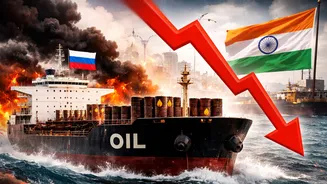
A Sanctions Threat with Far-Reaching Consequences ;India, which emerged as one of the world’s largest buyers of discounted Russian oil after Western sanctions were imposed in 2022, now finds itself directly in the line of fire. The fallout, if such tariffs were ever implemented in full, would extend far beyond trade figures, striking at the core of India’s economic stability, energy security and strategic autonomy.
A Silver lining: Transactional Sanctions and the Return of Venezuelan Crude
Indications from senior U.S. officials suggest that the Trump administration may consider permitting India to resume purchases of Venezuelan crude oil, reflecting a transactional, and business-first approach to sanctions. Washington is reportedly weighing selective relaxation or licensing mechanisms that would allow Indian refiners to buy oil while repaying outstanding dues, recalibrating sanctions without fully dismantling them. For India, such a move would offer strategic relief at a time of volatile global energy markets and heightened scrutiny of alternative suppliers.
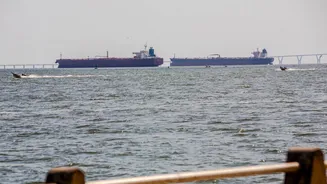
At present, India’s imports of Venezuelan oil are negligible, having fallen to near zero after U.S. sanctions were re-imposed. This marks a sharp contrast with pre-sanctions levels, when India was importing up to 350,000–400,000 barrels per day. If sanctions are eased, industry estimates suggest India could initially access 100,000–150,000 barrels per day, largely benefiting complex refineries capable of processing Venezuela’s heavy crude. While well below historical peaks, even this limited reopening would materially diversify India’s crude basket and revive a long-dormant energy corridor.
Impact on Stock Markets and Foreign Investors
Beyond trade and energy, the tariff threat would transmit a sharp shock to India’s financial markets. In 2024–25, foreign portfolio investors (FPIs) hold roughly USD 700–750 billion in Indian equities and debt combined, making sentiment highly sensitive to geopolitical and trade risks. A credible threat of 500 per cent U.S. tariffs could trigger short-term equity corrections of 5–8 per cent, particularly in export-exposed sectors such as pharmaceuticals, IT services, engineering goods and textiles, which together account for nearly 20 per cent of Nifty earnings. Past episodes of trade or sanctions-related stress suggest FPI outflows could reach USD 15–25 billion within months, weakening the rupee by 2–3 per cent and pushing up government bond yields by 30–50 basis points. Such volatility would raise corporate borrowing costs, delay investment decisions and complicate fiscal management at a time when growth momentum remains critical.
Economic Cost of Stopping Russian Oil
If India were forced to abruptly halt Russian oil imports, the consequences would be immediate and severe. Refiners would need to turn to alternative suppliers in West Asia, Africa, or the Americas, almost certainly at higher prices. Even a USD 8–10 per barrel increase on replacement volumes would raise India’s annual import bill by USD 10–12 billion. This would widen the current account deficit by about 0.3–0.4 percentage points of GDP, weaken the rupee, and strain fiscal balances. Higher fuel costs would ripple through transport, fertilisers, power generation and manufacturing, potentially shaving 0.2–0.4 percentage points off GDP growth in the short term.
How Much India Imports from Russia
In value terms, India’s oil imports from Russia since sanctions began are estimated to exceed USD 120–150 billion cumulatively, equivalent to roughly ₹10–12 lakh crore at prevailing exchange rates. These imports generated significant savings. Conservative estimates suggest discounted Russian crude reduced India’s annual oil import bill by USD 9–11 billion. This relief helped contain domestic fuel prices, moderate inflation, and ease pressure on the current account deficit at a time when global energy markets were highly volatile.
Why Trump Is Targeting India: Transactional Politics and Strategic Defiance
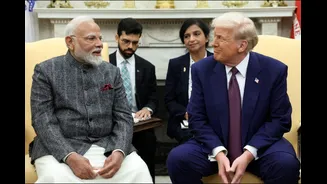
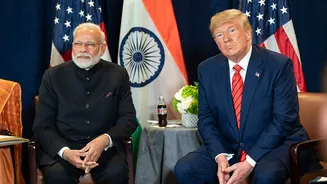
Donald Trump’s increasingly vindictive posture towards India must be read through the prism of his transactional worldview and domestic political calculus rather than any sudden deterioration in bilateral fundamentals. Trump has long viewed trade deficits as evidence of exploitation, and India—despite being a strategic partner—has repeatedly featured in his rhetoric as a “tough trader” that protects its markets while benefiting from access to the U.S. economy. India’s refusal to fall in line on Russian oil, its insistence on strategic autonomy, and its resistance to American pressure on issues ranging from tariffs to defence sourcing all cut against Trump’s preference for visible submission and quick wins. Experts say that this irritation was sharpened when New Delhi firmly rejected Trump’s claims of having mediated a cessation of hostilities between India and Pakistan, underscoring India’s unwillingness to validate narratives crafted for domestic political consumption. India also pointedly refrained from endorsing or promoting Trump for the Nobel Peace Prize—unlike Pakistan—an omission that reportedly stung a leader deeply invested in symbolic affirmation. For a politician who equates public praise with loyalty, such restraint has translated into continued needling and punitive posturing towards India.
Trade Deal at Risk: Economic Fallout and Strategic Costs
If such vindictiveness translates into action, the fallout for an India–U.S. trade deal would be severe. Any prospect of a limited trade agreement or sector-specific market access arrangement would be pushed into deep freeze, replaced by uncertainty and retaliatory posturing. Indian exporters would face not only punitive tariffs but also long-term erosion of confidence in the stability of U.S. trade policy, while American companies invested in India would encounter a more cautious regulatory and political environment. Strategically, the damage would extend beyond commerce: supply-chain cooperation, technology transfers, and Indo-Pacific economic coordination would suffer. A trade rupture driven by coercion rather than negotiation would undermine the very partnership Washington claims to value, pushing India to hedge more aggressively with alternative markets and reinforcing the lesson that over-reliance on any single power carries unacceptable economic and strategic risks.
Existing India–U.S. Trade will be hit
India–U.S. trade relations have expanded steadily over the past decade. Bilateral goods trade crossed roughly USD 120–130 billion annually by 2024, with the United States remaining one of India’s largest export destinations. Indian exports to the U.S. are valued at about USD 75–80 billion a year and span labour-intensive and high-value sectors such as textiles and apparel, pharmaceuticals, engineering goods, IT hardware, chemicals, and gems and jewellery. A tariff escalation of even 25–50 per cent would severely erode competitiveness; a 500 per cent tariff, if applied across categories, would amount to a de facto trade embargo. Indian goods would be priced out of the U.S. market almost overnight, forcing exporters to cancel long-term contracts, absorb heavy losses, or scramble for alternative markets that cannot easily match U.S. volumes or margins.
Sectoral Fallout and Investor Confidence
The sectoral impact would be uneven but deeply damaging. Textiles and garments, already under pressure from slowing global demand, would face factory shutdowns and job losses. Pharmaceuticals, where India supplies nearly 40 per cent of generic medicines consumed in the U.S. by volume, would encounter regulatory uncertainty and higher costs, with possible repercussions for American healthcare prices as well. Engineering goods and auto components, tightly integrated into global supply chains, would see order cancellations and delayed investments. Investor confidence would suffer not only in export-oriented manufacturing but also in wider India–U.S. economic cooperation, including technology partnerships and supply-chain diversification initiatives that Washington itself has encouraged.
Energy Security at the Core of the Dispute
The economic shock would not be confined to exports alone. India’s macroeconomic stability is closely tied to energy prices, and it is here that the Russia dimension becomes central. India imports over 85 per cent of its crude oil requirements, making affordable and reliable supplies a national priority. Since Western sanctions on Russia began in 2022, Indian refiners sharply increased purchases of Russian crude, attracted by discounts that at times ranged between USD 8 and USD 15 per barrel compared to Brent. By 2023–24, Russia accounted for roughly 35–40 per cent of India’s total crude imports, up from less than 2 per cent before the Ukraine war.
Geopolitical Pressures and Strategic Autonomy
The proposed tariffs place India at the centre of a broader geopolitical dilemma. India has consistently upheld strategic autonomy, refusing to align fully with any single power bloc. Its ties with Russia span defence, nuclear energy and multilateral diplomacy, while its partnership with the United States has deepened across trade, technology, defence and the Indo-Pacific. The sanctions threat effectively asks India to subordinate its energy and economic decisions to Washington’s geopolitical objectives, a precedent New Delhi is unwilling to accept.
The Question of Sovereignty
For India, the issue is not an endorsement of Russia’s actions but opposition to the principle of extraterritorial sanctions that undermine sovereign decision-making. Accepting such pressure would weaken India’s negotiating position in future crises and raise doubts about the reliability of economic partnerships that can be weaponised for political ends.
Way Forward for India
The way ahead lies in calibrated diplomacy rather than confrontation or compliance. India must engage Washington through sustained, high-level negotiations to seek exemptions, waivers, or phased implementation, stressing that its energy imports are driven by developmental needs rather than political alignment. New Delhi can credibly argue that as a fast-growing economy, sudden disruptions to oil supply would hurt growth, inflation and global economic stability itself.
Reducing Vulnerabilities without Shock Therapy
At the same time, India must gradually reduce over-dependence on Russian crude by diversifying sourcing from West Asia, Africa and the Americas, without triggering sudden price shocks. Strengthening strategic petroleum reserves is essential, especially when a sharp shift could raise the import bill by USD 9–11 billion annually. Accelerating renewable energy and alternative fuels is equally critical. India’s target of 500 GW of non-fossil fuel capacity by 2030 is not merely an environmental goal but a strategic shield against geopolitical energy coercion.
A Defining Test for India’s Global Position
Even if the 500 per cent tariffs are never fully imposed, the threat itself underlines how economic interdependence can be turned into leverage. For India, the challenge is to navigate this moment without sacrificing growth, energy security or strategic autonomy. How New Delhi balances these competing pressures will shape not only the future of India–U.S. relations but also India’s role in an increasingly fragmented and coercive global order.
(Writer is strategic affairs columnist and senior political analyst based in Shimla)