




What is that in man which makes him live and move, and what becomes of that when he dies? The first philosophers studied the material substance, and tried to reach the ultimate through that. At best, they
found a personal governor of the universe, a human being immensely magnified, but yet, to all intents and purposes, a human being. But that could not be the whole of truth; at best, it could be only partial truth. We see this universe as human beings, and our God is our human explanation of the universe.
Perspective and the universe
Suppose a cow were philosophical and had religion; it would have a cow universe and a cow solution of the problem, and it would not be possible that it should see our God. Suppose cats became philosophers; they would see a cat universe and have a cat solution of the problem of the universe, and a cat ruling it. So we see from this that our explanation of the universe is not the whole of the solution. Neither does our conception cover the whole of the universe. It would be a great mistake to accept that tremendously selfish position which man is apt to take.
Limits of the senses
Such a solution of the universal problem as we can get from the outside labours under this difficulty: in the first place, the universe we see is our own particular universe, our own view of Reality. That Reality we cannot see through the senses; we cannot comprehend It. We only know the universe from the point of view of beings with five senses. Suppose we obtain another sense; the whole universe must change for us. Suppose we had a magnetic sense; it is quite possible that we might then find millions and millions of forces in existence which we do not now know, and for which we have no present sense or feeling.
Our senses are limited, very limited indeed; and within these limitations exists what we call our universe, and our God is the solution of that universe. But that cannot be the solution of the whole problem.
Seeking a universal truth
But man cannot stop there. He is a thinking being and wants to find a solution which will comprehensively explain all the universes. He wants to see a world which is at once the world of men, and of gods, and of all possible beings, and to find a solution which will explain all phenomena.
We see we must first find the universe which includes all universes; we must find something which, by itself, must be the material running through all these various planes of existence, whether we apprehend it through the senses or not. If we could possibly find something which we could know as the common property of the lower as well as of the higher worlds, then our problem would be solved.
Even if by the sheer force of logic alone we could understand that there must be one basis of all existence, then our problem might approach some sort of solution; but this solution certainly cannot be obtained only through the world we see and know, because it is only a partial view of the whole.
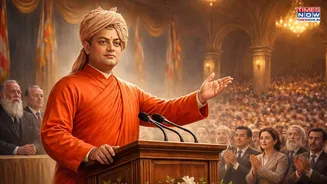
Excerpts of a lecture on Realisation delivered by Swami Vivekananda in London, October 29, 1896.