








Mumbai: AI is reshaping engineering education, research, and industry worldwide, prompting universities to rethink how they train future engineers and technologists. In an exclusive interaction with The
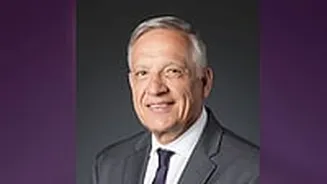
Free Press Journal, Yannis Yortsos, Dean of the USC Viterbi School of Engineering, shares insights on USC’s AI strategy, new academic programmes, industry links, and the importance of Indian students.
FPJ: How does USC respond to and shape rapid advances in AI? Yortsos: Technology, especially AI is moving at an extraordinary pace, and we both influence that progress and adapt to it very quickly. Take generative AI, for example. ChatGPT emerged in late November 2022, but its success was built on earlier foundational research. The core idea comes from a landmark paper titled Attention Is All You Need, developed at Google’s DeepMind. What many people don’t realise is that two of the co-authors of that paper are USC engineering alumni, both of Indian origin.
Ashish Vaswani earned his PhD in computer science, and Niki Parmar completed her master’s degree at USC. Their work played a major role in shaping large language models as we know them today. So in many ways, USC has directly contributed to the development of technologies like ChatGPT. At the same time, the field has exploded, with companies such as OpenAI, Anthropic, and many others pushing boundaries.
To keep pace with these developments, we launched the School of Advanced Computing within the Viterbi School of Engineering last year. This new school brings together computer science, electrical and computer engineering, and related disciplines. AI is not just about algorithms; it’s also about hardware, chips, and how quickly and efficiently computations can be performed.
Beyond that, AI increasingly raises questions around materials science and, importantly, energy. AI systems consume enormous amounts of energy, particularly during training. As the technology scales, energy becomes a central concern, which is why you hear so much about data centres today. So when we look at AI today, we see it as a convergence of materials, information science, algorithms, and energy. This is also why areas like nuclear energy are once again gaining attention. Technology has expanded far beyond isolated innovations—it has become a deeply interconnected ecosystem.
FPJ: How is USC blending traditional engineering with AI and emerging technologies?
Yortsos: I spoke about this recently at a plenary session at the National Academy of Engineering, and I made the point that there are three things we need to focus on. First, every engineering student must have deep technical knowledge in their core domain. You cannot abandon physics, chemistry, mathematics, or fundamentals just because AI exists.
The moment we do that, we might as well close shop. Engineers still need to understand first principles. Someone has to be the human in the loop, the person who can say whether something is correct, accurate, or even makes sense. Second, all students need to understand what AI actually is. Not just how to use it, but what drives it.
That means understanding algorithms and the basics of computer science. Whether you are studying mechanical engineering, chemical engineering, or biology, you still need to grasp the computational side of AI. That demystifies the technology. The third aspect is the social dimension of AI. Students must understand the broader impact of these technologies: the unintended consequences, both positive and negative. Engineers and technologists have a responsibility to think about how what they create affects society. At the end of the day, technology should serve humanity, not work against it.
FPJ: What new programmes or specialisations has USC introduced? Yortsos: We revise our curriculum constantly. One major addition is a new bachelor’s degree in artificial intelligence. Just as students can pursue a bachelor’s in computer science, they can now earn a bachelor’s degree specifically in AI. We also launched a programme called AI for Business, which has been running for about a year now.
This is a true joint degree between the engineering school and the business school; it’s not a minor. Students go through rigorous engineering training alongside equally strong business education. Graduates come out with a solid understanding of AI and technology, but also how those tools apply in real-world business settings.
FPJ: How important are Indian students to USC?
Yortsos: If you look at the student population, there are broadly three categories. First are undergraduates, then graduate students, mostly professional and master’s programmes and finally those pursuing research, mainly at the PhD level. In the US, international undergraduates make up around 10 to 15 per cent of the total student population, and I don’t see that changing dramatically.
Where we see the biggest growth is at the master’s and professional level. Students come from all over the world, and India is a major contributor. At USC, we’ve historically had and continue to have a strong presence of Indian students in these programmes. At the PhD and research level, Indian students play a very significant role across the US. You can see this reflected in the leadership of major technology companies like Microsoft, Google, and others where many top executives are of Indian origin.
FPJ: Is Viterbi planning any India-specific scholarships or collaborations?
Yortsos: We already have several programmes in place. There are scholarships, and we also run a number of summer programmes. One important collaboration is with the Indo-U.S. Science and Technology Forum (IUSSTF), through which we host Indian students for internships at USC. We typically receive around 20 students each year through this programme. At the PhD level, students receive full financial support.
At the master’s level, scholarships exist, but they are less frequent. There are a few reasons for this: the number of students is much larger, the programmes are shorter, and the institutional investment is not the same as it is for PhD students, who are typically supported for four to five years.
Along with that at USC, every PhD student is guaranteed funding for four years, whether through teaching assistantships, research assistantships, fellowships, or a combination of these. Beyond that, students can also find on-campus employment, such as workstudy roles, which provide additional support during their time at the university.
FPJ: How do Viterbi’s industry links help Indian students gain real-world experience?
Yortsos: Along with classroom learning that includes hands-on components, international students also have access to Curricular Practical Training, or CPT. This allows them to take up internships in industry while they are still enrolled as students. After graduation, there is Optional Practical Training, or OPT, which allows students to work in the US for a certain period.
FPJ: What job trends are you seeing among Viterbi graduates?
Yortsos: AI has become a common denominator across many fields. It functions as a tool, a technology, and often a catalyst. It’s difficult to imagine a future where people won’t use AI in some form. That’s why we believe every student needs a working knowledge of AI and related technologies. Just as mathematics is a foundational skill, AI and robotics will become an integral part of engineering education.
In terms of jobs, we’re in the middle of a major transition. Many traditional roles that once had little to do with AI are being redefined to include it. This is happening across sectors biotechnology, electronics, materials science, energy, water, and even quantum computing. I tend to think of engineering opportunities in four broad areas. The first is sustainability energy, water, climate, air, food systems.
The second is health, where technology is set to play a transformative role, creating strong demand for engineers and biotechnologists. The third is security, which includes areas like space, supply chains, electronics, and potentially defence, depending on how global geopolitics evolves. The fourth area is what I call “enriching life.” This is about how technology supports the arts, education, scientific discovery, entertainment, and culture, everything that helps improve quality of life beyond basic needs.
FPJ: At the Viterbi School of Engineering, is there a particular programme that sees higher interest from Indian students?
Yortsos: For quite some time, both in India and globally, there was a very strong focus on computer science and software-related fields. That trend is still there, but it has begun to spread across disciplines. You may now see fewer students looking only at traditional computer science and more students moving towards areas like artificial intelligence. At the same time, interest is expanding across the entire spectrum of engineering. AI, in particular, is no longer confined to engineering alone. You see its influence in economics and many other fields as well. AI has suddenly become a new tool, a new catalyst, and a new technology that is changing how industries operate. It’s affecting everything from engineering to the arts, from writing to creative work. So student interest is broadening, not narrowing.
FPJ: What advice would you give to Indian students applying to USC? Yortsos: We look for students who genuinely want to learn and who are eager to contribute. My advice to students is not to worry too much about politics. Politics changes all the time. What really matters is what you learn, how you grow, and how you position yourself for future opportunities. Trying to predict exactly how things will look two or three years from now is understandable, but it’s rarely accurate. The path is often complex and full of unexpected turns. What’s important is whether doors are opening for you. And when one door opens, it often reveals opportunities you hadn’t even considered before. Take the opportunity, learn, explore, and then decide what comes next. The opportunities are immense; it’s about being open to them.