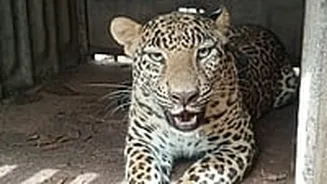






Nashik: Against the backdrop of fear of leopards while working in the fields and the terror of sudden leopard sightings in human settlements at night, the Nashik district administration has taken concrete
steps to reduce leopard-human conflict.
It has been decided to implement the management model that proved successful in Mumbai's Sanjay Gandhi National Park (SGNP) in Nashik. For this purpose, a state-of-the-art and scientific 'Integrated Action Plan' has been prepared.
Areas in the district will be scientifically classified as 'high-risk zones' and 'medium-risk zones'. In high-risk zones, where leopard activity is high or where conflict incidents have occurred previously, advanced systems, rapid response teams, and continuous monitoring mechanisms will be established. In medium-risk zones, preventive measures, awareness campaigns, and precautionary advisories will be effectively implemented.
Despite a large leopard population in SGNP, incidents of attacks on humans are comparatively low. This is due to the emphasis on scientific planning, trained rescue teams, immediate response systems, and awareness among local citizens.
This successful experience will serve as a guide for Nashik. The Forest Department stated that the objective of the plan is not a 'leopard-free Nashik', but a 'leopard-conflict-free Nashik'. This will strike a balance between wildlife conservation and human safety.
Avoiding Conflict is the Main Objective
District Collector Ayush Prasad and District Planning Officer Vijay Shinde have discussed the plan with the Chief Conservator of Forests of Nashik and Ahilyanagar Forest Circles, G. Mallikarjun, and have initiated the process of finalising it. The main objective of the plan is not to eliminate leopards, but to prevent human-wildlife conflict.
If this plan is successful, leopard-human coexistence will be possible in Nashik district. This initiative by the administration and the Forest Department is being welcomed by the citizens.
The Integrated Action Plan includes:
- Scientific classification of high-risk and medium-risk areas in the district.
- A special treatment and rescue center for injured or sick leopards.
- Rehabilitation of leopards in their natural habitat.
- A large-scale public awareness campaign to dispel rumors and misconceptions.
- Emphasis on tree plantation and increasing greenery in view of the Simhastha Kumbh Mela.