






Sleep has entered a paradisiacal phase in the beauty industry. From silk pillowcases and viral anti-wrinkle pillows to sleep-enhancing products and even mouth tape, brands are increasingly tapping into
the idea of ‘beauty sleep’. But as skincare culture grows more granular, even the way we sleep has come under scrutiny. Now, there’s a rising anxiety around something deceptively simple: sleeping on your side. Could your favourite sleeping position be etching lines into your face night after night?
Anatomy of a sleep line
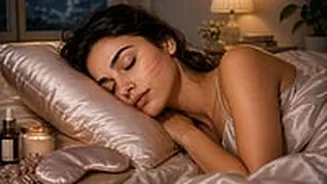
In simple terms, when asked, Dr Geeta Grewal, cosmetic surgeon and founder of 9 Muses Wellness Clinic and 9M Skincare, puts it plainly: “Yes, sleeping on your side can lead to ageing and wrinkles.” These occur through the formation of what are known as ‘sleep wrinkles’. Side sleeping is widely considered one of the most comfortable positions. But from a purely aesthetic standpoint, it is not so.
"Unlike expression lines caused by muscle contractions, these are the result of mechanical shear and compression forces applied to the skin for hours at a time. Research published in the Aesthetic Surgery Journal indicates that because we spend approximately 65% of our sleep cycle on our sides, repetitive lateral pressure consistently reinforces these creases. Over time, these temporary ‘pillow marks’ become permanent as the skin loses its ability to snap back,” explains board-certified dermatologist Dr Kiran Sethi, founder of Isya Aesthetics and Active Longevity, Delhi.
However, side sleeping is also said to have visible long-term effects. Clinical assessments often show that side sleepers have deeper nasolabial folds and more noticeable ‘etched’ lines on the side they favour, making the impact of sleep position significant over time.
However, age also plays an important role. “When we are young, collagen and elastin snap back beautifully. With age, collagen synthesis declines, and elastin becomes fragmented. The skin loses its recoil. Lines that once disappeared in minutes start lingering - eventually becoming etched into the skin,” explains Dr Zeba Chhapra, dermatologist and MD at Serenity Med Aesthetics, Mumbai.
How to sleep
So, what’s the best position to sleep in to avoid lines and wrinkles? All three dermatologists we spoke to agreed that, statistically, back sleeping (supine) is the gold standard for wrinkle prevention. From a purely dermatologic standpoint, it is the least mechanically stressful position for facial skin. “When you sleep on your back, gravity pulls the skin backwards toward the ears, essentially providing a ‘natural lift,’ whereas side or stomach sleeping applies unilateral pressure that can induce sagging,” explains Dr Sethi.
Before you swear off your favourite sleep position, it’s worth zooming out. Wrinkles are influenced by a complex interplay of other factors. “Let’s stay rational. Sun exposure, smoking, hormonal decline, oxidative stress, and genetics contribute far more to wrinkle formation than sleep position alone,” highlights Dr Chhapra. “If someone sleeps on their side but uses sunscreen daily and stimulates collagen appropriately, they will age better than a back sleeper who gets exposed to UV light often.”
But can sleeping on your side only lead to sleep-related wrinkles? Not quite. “The concern isn’t limited to wrinkles alone,” explains Dr Geeta Grewal. “In clinical practice, I’ve observed changes that go beyond the skin, affecting multiple tissue layers including fat compartments, ligaments, and even underlying bone.”
She adds that while some people may habitually sleep on one side without visible effects, others can be more susceptible. In such cases, prolonged unilateral compression may contribute to facial asymmetry, where one side appears more compressed or slightly smaller over time, potentially altering overall facial balance.
Sleepmaxxing
Social media and skincare forums have turned bedtime into a ritual of optimisation. If you’re spending a third of your life asleep, why not make it work harder for your skin? This mindset has led to a surge in products designed to minimise facial compression - ranging from low-friction fabric pillowcases to adhesive patches or ‘face tape’ meant to immobilise certain areas overnight. “Fabrics such as silk or satin provide a much smoother surface, resulting in reduced friction and less mechanical stress on both the skin and hair,” says Dr Grewal.
Additionally, a new category of sleep aids is quietly gaining traction. “Specialised orthopaedic ‘beauty pillows’ with cut-outs for the cheeks are designed to offload pressure from the face, offering a functional middle ground for those who struggle to sleep on their backs - but these are still hard to find in India,” adds Dr Sethi.
But these solutions aren’t miracle fixes. “They don’t stop folds and wrinkles from forming completely, but they can reduce some mechanical stress,” cautions Dr Chhapra.
In the larger scheme of things, while it may be frustrating that the position you find most natural and comfortable could contribute to lines and wrinkles, it’s not something to lose sleep over. You can adjust your skincare routine to help counter the effects of friction and folding, and treat any resulting lines, but as Dr Sethi rightly points out, managing your sleep posture remains one of the few completely free, non-invasive ways to support your skin’s structural longevity, alongside a consistent topical routine.