








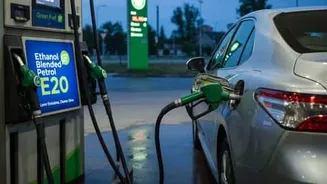
State-owned oil marketing companies (OMCs) have sought to allay concerns over the quality of E20 petrol, saying extensive testing across the country has found no evidence of widespread moisture or chloride
contamination in the ethanol-blended fuel.
Indian Oil Corporation (IOC), Bharat Petroleum Corporation Ltd (BPCL) and Hindustan Petroleum Corporation Ltd (HPCL) said the intensified surveillance programme was initiated after recent reports raised questions about possible contamination in E20 petrol, which contains 20% ethanol.
In a joint statement, the three companies said testing was conducted across the entire fuel supply chain, from refineries and ethanol-producing facilities to storage locations and retail outlets. The results, they said, showed that fuel quality remained well within the regulatory specifications.
Extensive Testing Finds Chloride Levels Within Limits
The OMCs said ethanol used for blending petrol is subject to strict chloride limits prescribed by the government. They added that frequent quality checks are carried out at refineries, distilleries, terminals, depots and fuel stations to ensure compliance.
More than 100 petrol samples taken from refineries showed chloride concentrations of 1 part per million (ppm) or lower. Testing of ethanol samples from 80 distilleries over the preceding 10 days found chloride levels below 3 ppm.
Similarly, more than 80 samples collected from depots and terminals across different parts of the country recorded chloride concentrations below 3 ppm.
OMCs Step Up Water-Ingress And Fuel Quality Checks
The oil companies said their monitoring systems have also been strengthened to detect possible water contamination. Retail outlets are conducting water-ingress and density checks between eight and 12 times a day.
Mobile fuel-testing laboratories have also been deployed, while results are being independently verified through accredited laboratories.
Mandatory inspections of underground storage tanks have additionally been launched at around 90,000 fuel stations across the country. According to the OMCs, the inspections and repeated water-ingress checks have not detected any cases of water entering the storage systems so far.