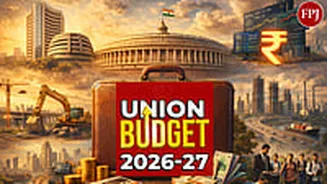

There are six pillars the Budget focuses on: scaling up manufacturing in strategic and frontier sectors; rejuvenating legacy industrial sectors; creating champion MSMEs; delivering a powerful push for
infrastructure; ensuring long-term security and stability; and developing City Economic Regions. The focus of the Budget, and of each of these pillars, is clearly long-term.
The hike in Securities Transaction Tax (STT) on futures and options is something the markets will focus on in the short term. One of the clearest areas of focus for India continues to be MSMEs. With over 63 million units, they are the backbone of India’s economy, contributing approximately 30% to GDP, about 35% to manufacturing output, and over 45% of exports. MSMEs foster entrepreneurship, drive inclusive growth, and generate employment opportunities. Major challenges faced by MSMEs include limited access to finance, complex regulatory compliance, difficulty in adopting new technology, skill gaps, and constraints in market access.
These factors hinder growth, impact productivity, strain cash flows, and make it difficult for MSMEs to compete with larger firms or adapt to digital changes. In this context, creating champion MSMEs as one of the six pillars is of utmost importance. Several initiatives announced by the Honourable Finance Minister aim to ensure that the country’s backbone grows stronger. Access to finance through the SME Growth Fund and the Self-Reliant India (SRI) Fund top-up includes an allocation of Rs 10,000 crore to the SME Growth Fund and an increase of Rs 2,000 crore in the SRI Fund.
This is aimed at addressing the biggest challenge MSMEs face — access to risk capital for high-potential enterprises. Liquidity and credit support through TReDS 2.0 has been further strengthened. Financial support has been enhanced through the Trade Receivables Discounting System (TReDS) via a credit guarantee support mechanism through CGTMSE for invoice discounting on the TReDS platform; linking the Government eMarketplace (GeM) with TReDS to share information with financiers on government purchases from MSMEs, enabling cheaper and quicker financing; and the introduction of TReDS receivables as asset-backed securities to help develop a secondary market, improving liquidity and settlement.
Corporate Mitras address another major challenge — compliance with complex regulatory requirements. Corporate Mitras, trained by professional institutions such as ICAI, ICSI and ICMAI, and with reach into Tier-II and Tier-III towns, are expected to provide a significant boost. Cluster rejuvenation and schemes for the labour-intensive textile sector include the revival of 200 legacy industrial clusters to improve cost competitiveness and efficiency through infrastructure and technology upgrades.
Several initiatives have been announced for the textile sector, including the National Fibre Scheme to promote self-reliance in natural, man-made and new-age fibres; the Textile Expansion and Employment Scheme to modernise traditional clusters through capital support, technology upgradation, and common testing and certification centres; the National Handloom and Handicraft Programme to integrate and strengthen existing schemes with targeted support for weavers and artisans; the Tex-Eco Initiative to promote globally competitive and sustainable textiles and apparel; and the Mahatma Gandhi Gram Swaraj initiative to strengthen khadi, handloom and handicrafts. In addition, a dedicated initiative for sports goods manufacturing will promote production, research and innovation in equipment design.
An increase of around 9% in public capital expenditure, along with major initiatives to develop infrastructure in cities with populations over five lakh, City Economic Regions, university townships, dedicated freight corridors and chemical parks, and the manufacturing of containers and electronic components, is expected to have positive ripple effects for MSMEs. Opportunities will also emerge through tourism and medical tourism hubs. MSMEs will continue to play a critical role as India moves towards a $5 trillion economy and beyond.