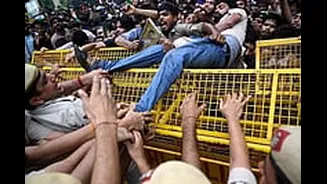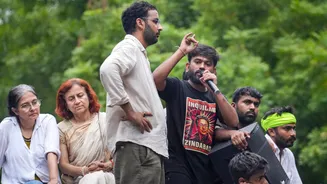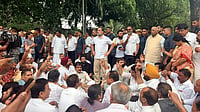





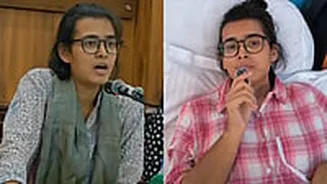

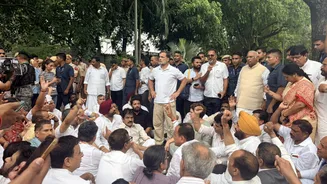
The student protests erupted following the NEET paper leak controversy, which was linked to the deaths of several students by suicide. The issue has fuelled ongoing demonstrations at Delhi’s Jantar Mantar.
The protest gained further momentum after activist Sonam Wangchuk joined the Cockroach Janta Party (CJP) alongside students, demanding the resignation of Union Education Minister Dharmendra Pradhan from his post. But have ministers in India resigned from their positions in the past? Read the full article to find out.
Lal Bahadur Shastri: First minister to resign after 1956 Railway incident
Resignations on moral grounds have been an important part of India's political history, though they remain relatively rare. In several high-profile cases, ministers stepped down after major accidents, security lapses or controversies, taking what was described as "moral responsibility" despite not being directly blamed for the incidents.
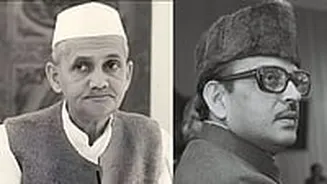
One of the most notable examples is Lal Bahadur Shastri, who resigned as Railway Minister in 1956 following the Ariyalur train accident in Tamil Nadu, which claimed over 150 lives. Although Prime Minister Jawaharlal Nehru initially declined his resignation, Shastri insisted on stepping down, setting a benchmark for ministerial accountability in India.
Ashwini Kumar resigned as Union Law Minister
In 2012, Ashwani Kumar resigned as Union Law Minister after the Supreme Court criticised the government's handling of the coal block allocation (Coalgate) investigation. Former Union Law Minister Ashwani Kumar resigned in May 2013. While the controversy was legal and political rather than an accident, his resignation was presented as an act of accountability.
Nitish Kumar resignation
Another prominent case is Nitish Kumar, who resigned as Union Railway Minister in 1999 after the Gaisal train disaster in West Bengal. The tragic collision between two trains killed nearly 300 people. Kumar said he was accepting moral responsibility for the accident. He tendered his resignation to then Prime Minister Atal Bihari Vajpayee, stepping down after the catastrophic head-on collision between the Awadh-Assam Express and the Brahmaputra Mail, which resulted in a massive loss of life. His resignation was formally accepted, making him one of the few ministers in independent India to step down on moral grounds following a major rail disaster.
A Raja resigned as Telecom Minister
A. Raja, the then Telecom Minister, stepped down on November 14, 2010, amid allegations surrounding the 2G spectrum allocation case. Although he denied wrongdoing, he resigned after mounting political pressure and to allow a fair investigation.
V.K. Krishna Menon resigned as India's Defence Minister
V.K. Krishna Menon resigned as India's Defence Minister on October 31, 1962. He took responsibility for the country's severe military unpreparedness and humiliating setbacks during the initial weeks of the Sino-Indian War.