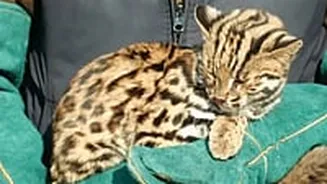

India’s high-profile programme to build a wild cheetah population suffered a blow when a vehicle on the Agra-Mumbai National Highway hit and killed a 20-month-old cub in the Kuno National Park in Madhya
Pradesh. Just a day earlier, a younger cub died after falling from a hillock in the same sanctuary. Cheetahs dying from natural causes is understandable, but not as roadkill. Prime Minister Narendra Modi should be dismayed at the trend. He marked International Cheetah Day, just a day before the first cub’s death, with the confident assertion that the steadily rising population of the cats was “extremely encouraging” and a “powerful testament to the fact that cheetahs have become fully established in the Indian environment”. It is now confirmed that nine adults translocated from Africa and 12 cubs born in India have died in Kuno in three years, while official data published on Cheetah Day put the surviving population at 32, including 21 cubs born in the country, not including the latest losses. Apparently, after compensating for losses of adults and a cub survival rate of 66.7%, the Union government’s Cheetah Action Plan provides for the import of 12 to 14 individuals every year in the first five years at an outlay of Rs 91.65 crore, based on availability from South Africa, Namibia, or other African countries. It is pertinent to ask whether the ambition to raise a significant population of wild cheetahs, adding to other top-level programmes such as Project Tiger and Elephant, has been factored into road building in forest areas, highway design, and traffic flow.
Any quest to save one charismatic species in the wild without an overall landscape approach is bound to suffer serious setbacks and inevitable failure. As a country keen to build more highways and encourage motorisation as part of economic ambitions, India cannot avoid losses to wild animal populations. One study in the Western Ghats reported recently that in one year, a single road in Nelliampathy recorded 330 roadkill incidents, involving 72 species of animals, most of them reptiles. Elsewhere, even apex species such as tigers and elephants die in collisions with road vehicles or trains. This depressing record can improve only with political will and a sincere effort to enable animals to cross vehicle-filled roads at dedicated zones that are engineered into road design—in the form of overpasses, underpasses, and fencing to funnel animals to safety. India’s rulers owe it to themselves to make this change to preserve the biodiversity that they have sustained, remarkably, over seven decades, in spite of a vast human population hungry for resources. The cheetah is unique in India, recorded in history mainly as a tamed courser aiding royal hunts, before its extinction and reintroduction. But in the absence of truly protected areas, its survival chances will continue to decline.