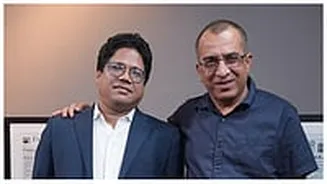

During the interaction, Chordia asserted that real assets are the backbone of India’s growth story. A real asset is defined simply as something tangible - that is an asset you can see, touch, and feel
and one that also produces a steady income. Crucially, they must function as a necessity or utility used by the common person, such as power grids, highways, or buildings. These are assets without which daily life and work like commuting to the office, or having a place to live cannot be completed. Historically, Indians primarily considered physical real estate mostly residential and gold as their preferred real assets.
Democratisation through Financialisation
Chordia drew an analogy between the evolution of real assets and the equity market just as ordinary investors gained access to pharmaceutical or IT companies through equity, they are now gaining access to infrastructure through financialisation. This transformation was driven by REITs (Real Estate Investment Trusts) and InvITs (Infrastructure Investment Trusts).
REITs and InvITs, launched in India in 2017, have already seen rapid growth, reaching an EV/AUM of ₹10 lakh crore. These structures operate like mutual funds, collecting capital to acquire diversified assets. SEBI regulation mandates that 90% of the cash flow generated by these operating assets must be distributed to investors. Returns are thus derived from two sources: regular income distributions, quarterly or semi-annually and appreciation in the unit price.
Bridging the Global Investment Gap
The concept of financialising real assets is not new internationally. REITs were first listed in the US in the 1960s, and financial investors backed infrastructure in Canada as early as the 1930s, meaning India lagged by two to five decades in this product innovation. Chordia noted that global pension funds, insurance companies, and asset managers were already earning income by investing in Indian assets for the benefit of their own citizens. His motivation was to ensure Indian citizens were not deprived of this opportunity to participate in and contribute to India’s growth.
These financial instruments filled a gap in the market, aiming for returns that are higher than low-beta bonds but lower than high-volatility equity, thereby delivering stable, consistent, and compounding returns. Public REITs and InvITs are highly accessible, allowing investments starting from amounts as low as ₹100 per unit. While private InvITs initially had a minimum lot size of 2 lakh units, this was recently reduced to 25,000 units, increasing accessibility for High Net Worth Individuals (HNIs).
Advantages Over Physical Ownership
Investing via REITs and InvITs offered significant convenience and risk mitigation compared to owning physical property. It eliminated the single-location risk associated with buying one flat (often costing ₹5–10 crore in major locations). Furthermore, it removed the ‘headache and maintenance’ of managing tenants, as this work is handled by professional teams. As the investment becomes a financial paper, investors could flexibly enter or exit the market, unlike physical assets where one must sell the entire property even if only a portion of capital was needed.
The Three Cs of Long-Term Sustainability
Because real assets are built for long lifecycles over 15 to 35 years, long-term sustainability was critical. Chordia emphasised evaluating climate resilience and social risk, arguing that economic returns must be assessed alongside these factors.
1. Cash Flow: The predictability of the revenue stream.
2. Contract: Long-term visibility of the contract or concession.
3. Counterparty: The creditworthiness of the entity, often government bodies paying the income.
Investing in climate-linked assets, such as renewable power or green buildings, reduced overall risk, which was why sustainability-linked bonds often have lower pricing.
Driving India’s Service Economy and GCC Growth
India's economy, which is 60–65% service-sector based, followed a trajectory similar to the US post-1987. India benefits from having the world’s second-largest annual output of STEM graduates and the largest pool of English-speaking STEM graduates. This talent drove the growth of Global Capability Centers (GCCs), shifting India’s role from low-cost BPO work to high-quality development centres. This GCC growth is currently concentrated in six major cities: Mumbai, Delhi NCR (Gurgaon), Pune, Chennai, Bengaluru, and Hyderabad, primarily because of the established ecosystem and universities.
Subahoo Chordia’s PPPT Framework
Reflecting on his career path from a chartered accountant in Jaipur to a finance expert, Chordia credited luck and continuous learning. He managed his business using the internal PPPT framework:
1. Planning: Took extensive time (2–3 years) to understand the landscape before launching a business.
2. People: Assembled a strong team, often hired from global institutions like Black Stone and Macquarie.
3. Processes: Established efficient workflows and checker systems.
4. Technology: Focused heavily on digitisation, such as using bespoke software to digitise highways and monitoring solar plant performance minute-by-minute.
Chordia noted that high-stress sectors like finance require managing the fear of the unknown. In the predictable real assets business, this is achieved through automated dashboards providing constant information flow and by relying on the team to divide the total stress. A key rule for managing stress is to avoid impatient or impulsive decisions, prioritising effective planning for potential emergencies.Real assets offer stability and are ideal for retirement investment, marking them as the "right" asset class for long-term financial security.