








Mumbai: Mumbai greeted Thursday morning with conditions that felt like a rare winter respite. Clear blue skies, relatively cool temperatures and gentle winds offered residents a welcome break from the
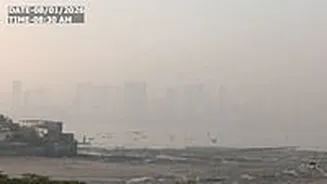
city’s persistent humidity. For a few hours, the city appeared calm and breathable. However, the pleasant spell did not last long. As the day progressed, a thin blanket of smog spread across several areas, reducing visibility, hiding the city's skyline and once again highlighting Mumbai’s growing air pollution problem.
The India Meteorological Department (IMD) had predicted largely comfortable weather, with minimum temperatures around 20°C and maximums reaching about 32°C. While temperatures stayed within this favourable range, the decline in air quality quickly overshadowed any meteorological comfort. Residents who stepped outdoors early in the morning soon noticed hazy conditions replacing the earlier clarity.
Overall AQI Remains Unhealthy
Data from air quality monitoring platform AQI.in showed that Mumbai’s overall Air Quality Index (AQI) touched 203 in the early hours, categorising the city’s air as ‘unhealthy’. This sudden spike was particularly concerning as Mumbai had recorded relatively better air quality just a few days earlier, offering brief relief from pollution-related discomfort.
Dust and fine particulate matter are seen as the primary reasons behind the worsening air conditions. Ongoing construction activity across Mumbai remains a significant contributor. Major infrastructure projects, including multiple metro rail corridors, flyover construction, coastal road development, road widening works and numerous private real estate projects, continue to release large amounts of dust into the atmosphere, intensifying pollution levels.
Chembur & Wadala Worst Hit
Certain localities emerged as major pollution hotspots. Chembur recorded an AQI of 323, placing it firmly in the ‘severe’ category and posing serious health risks even to otherwise healthy individuals. The Wadala Truck Terminal and Deonar followed closely with AQI readings of 318 and 307 respectively. In south Mumbai, Sewri reported an AQI of 293, while Worli recorded 280, both reflecting unhealthy air conditions.
Some suburban areas showed relatively better readings, though air quality there was still far from ideal. Andheri East recorded an AQI of 60, while Charkop stood at 92, both categorised as ‘moderate’. Kandivali East reported 93, Bandra West 95 and Borivali East 110, indicating that moderate to poor air quality persists across many residential pockets.
According to standard classifications, AQI values between 0 and 50 are considered ‘good’, 51 to 100 ‘moderate’, 101 to 200 ‘poor’, 201 to 300 ‘unhealthy’, and readings above 300 fall under ‘severe’ or ‘hazardous’. With Mumbai repeatedly slipping into unhealthy categories, concerns over long-term public health and the need for stricter pollution control measures continue to grow.
To get details on exclusive and budget-friendly property deals in Mumbai & surrounding regions, do visit: https://budgetproperties.in/