








Some roads do more than take you from one place to another; they take you somewhere inside yourself. That is exactly what happens when you enter the Gautala Autramghat Sanctuary. Nestled in the ghats of
north-western Maharashtra, this forested landscape feels untouched, timeless and quietly alive. It is not just a wildlife sanctuary; it is a sanctuary for the senses.
Driving through a tunnel of green and sunlight
The moment you leave the highway behind, the forest seems to swallow the world whole. The road narrows and twists, and the noise of engines and horns dissolves into the soft whisper of leaves. Teak and Anjan trees lean over the asphalt, their branches entwining to form a natural tunnel.
Sunlight filters through the canopy in golden shafts, catching dust motes that float like tiny fireflies. The air carries the scent of wet earth and moss, with a faint, sweet tang of fallen leaves. Each breath feels sharper, cleaner, as though the forest is inviting you to slow down.
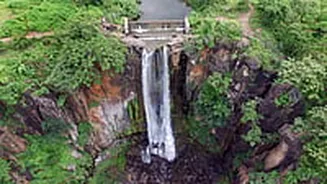
With every bend, the scenery shifts. A small stream glints beside the road, reflecting fragments of sky. A waterfall cascades from basalt cliffs, spilling over rocks with a soft, hypnotic patter. The sound of water is constant and grounding, a rhythm that settles in your chest.
Wildlife makes fleeting appearances along the way
Even before you leave the car, the forest announces its presence. Langurs leap gracefully across branches, their long tails curling like brushstrokes. A peacock flashes iridescent blues and greens across a sunlit clearing before vanishing into the undergrowth. Occasionally, a chinkara darts through tall grass, leaving only a ripple of movement in its wake.
Each encounter is fleeting yet vivid, like the forest winking at you. You find yourself slowing down, almost instinctively, letting the sanctuary set the rhythm.
Exploring the ancient Pitalkhora caves
A short path leads to the Pitalkhora Caves, rock-cut Buddhist halls carved into basalt cliffs around the 2nd century BCE. The trail descends into a cool ravine, each step crunching softly on gravel and fallen leaves. The air grows heavier, scented with stone, moss and the subtle tang of dripping water.
Inside the caves, centuries press softly against the skin. Water trickles from ceilings, echoing through the chambers. Shadows cling to every corner, shifting as your eyes adjust. A single shaft of sunlight illuminates carvings worn smooth by time. It is silent yet alive, as if the past itself has waited here for visitors to pause.
Waterfalls and mist bring the forest alive in the monsoon
During the rains, the sanctuary transforms. Waterfalls pour from cliffs in silver threads, pooling into hidden streams that criss-cross the forest floor. Mist rises from the ground, curling around tree trunks and creating ethereal pockets of soft-focus air. The forest smells of wet bark, fresh ferns and the earthy sweetness of rain-soaked soil.
Even the sunlight seems gentler, filtered through thousands of leaves, casting shifting patterns of green across the ground. Every leaf glistens, every insect hums and every birdcall resonates further in the humid, vibrant air.
Essential tips for visiting Gautala sanctuary
Best time to visit: Post-monsoon (October to February) for clear skies and mild weather; monsoon (June–September) for waterfalls in full flow.
Vehicle choice: A car with decent ground clearance is recommended; some forest roads are uneven.
Fuel and supplies: Petrol stations are scarce near the forest; carry water and snacks.
Navigation: Download offline maps, as mobile signal is patchy in deep forest areas.
Wildlife etiquette: Keep windows up near animals and maintain a respectful distance.