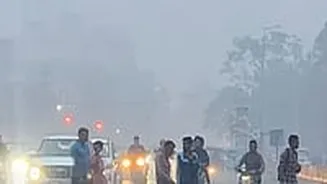








Indore (Madhya Pradesh): Air quality remained unstable over the past week, with several locations in Indore recording sharp fluctuations and slipping into the “moderate” and “poor” categories, official
monitoring data from December 8-15 shows.
At the Chhoti Gwaltoli monitoring station, the Air Quality Index (AQI) crossed 200 on multiple occasions, touching the “poor” category on December 11 and 12.
During this period, particulate matter emerged as a key concern. PM10 levels peaked above 300 µg/m³, while PM2.5 rose close to 195 µg/m³—far exceeding prescribed safety limits. These readings indicate a heavy presence of dust and fine particles in the air, increasing health risks for residents.
In contrast, residential areas such as the Residency Area recorded comparatively better conditions, largely remaining in the “good” to “satisfactory” range. However, brief spikes of “moderate” pollution were still observed, particularly during late evening and night hours when dispersion is limited. PM2.5 continued to be the dominant pollutant even in these zones.
Experts attribute the deterioration to multiple factors, including ongoing BRTS corridor removal, which exposed soil and construction debris, raising road dust levels. Traffic congestion around work sites has added vehicular emissions, while winter conditions—low wind speed and temperature inversion—have trapped pollutants near the ground.
Doctors warn that sustained exposure to high PM2.5 levels can aggravate asthma, bronchitis and heart conditions, especially among children and the elderly. Environmental specialists recommend stricter dust-control measures, better traffic management and reduced outdoor activity during early mornings and late evenings to prevent further decline in air quality.