
The budget is all-encompassing, addressing most of the facets and segment of education. It acknowledges the necessity for education to enhance employability and align with the demands of the corporate
world and enterprises.
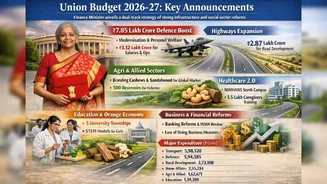
2. University Townships Initiative
The establishment of five University Townships adjacent to industrial corridors represents a brilliant strategy in spatial planning—effectively integrating the classroom within the workplace ecosystem.
3. Promoting Girls’ Safety
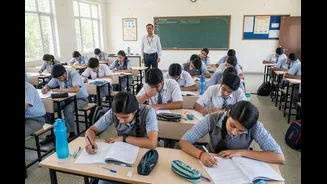
The commitment to provide a girls' hostel in every district is a practical approach to addressing the issues of safety and logistics for female students, which have historically deterred them from pursuing higher education.
4. Mental Health Focus
Simultaneously, there is a significant emphasis on mental health, as evidenced by the creation of NIMHANS-2 in North India and the training of 150,000 caregivers in fields such as applied psychology and behavioural health, acknowledging that student well-being is crucial for academic success.
5. Innovation and Research
These initiatives are further supported by the introduction of modern fields such as AI centres of excellence, AVGC Labs, Atal Tinkering Labs, and provisions related to the astronomy and biopharmaceutical sectors, setting the stage for innovation and research while marking a transition towards a creative demographic dividend.
Also Watch:
6. Challenges Ahead
Overall, the budget is forward-thinking and adaptable. Specific regulations concerning TCS Reduction for LRS and interest subvention are expected to enhance this sector. Nevertheless, simply implementing these initiatives will not suffice; true success hinges on tackling several additional challenges.
7. Focus on Implementation
While budgets have been allocated, achieving the desired results necessitates a greater focus on teacher training, increased tax incentives to promote research in universities, and addressing issues related to electricity provision and the gaps in internet access and the use of digital technology, particularly for females, which are essential for realizing the intended outcomes.
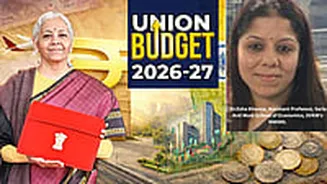
--- Dr.Esha Khanna, Assistant Professor, Sarla Anil Modi School of Economics, SVKM's NMIMS.