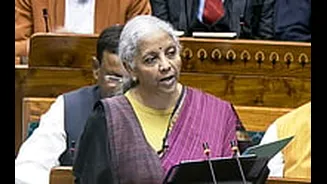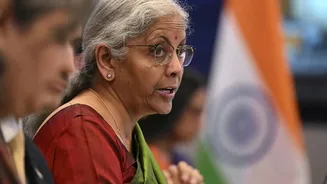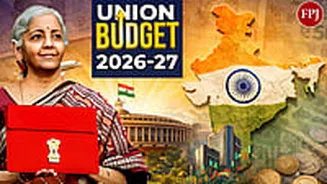

New Delhi: In the Union Budget 2026, Finance Minister Nirmala Sitharaman sent a clear message about the strength and future direction of India’s financial sector. She said Indian banks are now in a strong
position, with healthy balance sheets, high profits, and much better control over bad loans.
She added that asset quality has improved significantly and loan coverage has crossed 98 percent, which means banks are now more stable and safer than before. This, according to her, makes the sector ready to support the next phase of India’s economic growth.
New High-Level Committee on Banking
To take banking reforms forward, the government will set up a high-level committee on banking for “Viksit Bharat”. This committee will review the entire banking system and suggest changes to make it stronger and more future-ready.
The committee will focus on financial stability, wider financial inclusion, and protecting consumer interests. The aim is to ensure that banks continue to remain strong while supporting growth in businesses, startups, and households.
Focus on NBFCs and Foreign Investment
The Budget also paid special attention to NBFCs (non-banking finance companies). The government has set a clear vision to increase credit flow and improve the use of technology in this sector.
Public sector NBFCs will be restructured into larger and stronger entities, similar to Power Finance Corporation and Rural Electrification Corporation. This is expected to improve efficiency and reduce risks.
For foreign investors, rules related to non-debt investments under foreign exchange laws will be reviewed. The goal is to make these rules simpler, more modern, and easier to follow, so that India remains attractive for global investors.
Push for Services Sector and Jobs
A new high-powered Education-to-Employment and Enterprises (E2E) Standing Committee will be set up to strengthen India’s services sector. This committee will identify areas with high growth potential, more jobs, and better export opportunities.
It will also study the impact of new technologies like artificial intelligence on jobs and skills. The aim is to make India a global leader in services, with a target of achieving a 10 percent share in the global services market by 2047.
Seven High-Speed Rail Corridors
The Budget also announced a major plan for sustainable passenger transport. The government will develop seven high-speed rail corridors to connect major cities.
The proposed routes are Mumbai–Pune, Pune–Hyderabad, Hyderabad–Bengaluru, Hyderabad–Chennai, Chennai–Bengaluru, Delhi–Varanasi, and Varanasi–Siliguri. These corridors will reduce travel time, cut pollution, and support regional development.
Together, these steps show that the government is focusing on strong banks, modern financial systems, job creation, and clean transport to drive long-term growth.