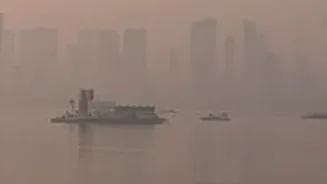









Mumbai: Mumbai began its Monday with clear blue skies, cool breezes and a refreshing winter nip, but the pleasant weather was overshadowed by a dense layer of smog that settled over the city. Despite the India
Meteorological Department (IMD) predicting clear skies and temperatures between 19°C and 32°C, the worsening pollution quickly became the dominant feature of the day. Visibility dipped across several areas and the city’s morning calm was replaced by unease as residents stepped out to find the air thick and acrid.
The city’s ongoing construction surge remains a major contributor to the pollution spike. Dust from large-scale infrastructure projects, including metro lines, bridges, coastal roads and extensive redevelopment, continues to lift fine particulate matter into the atmosphere. Private real estate work adds to the load, creating a mix of suspended dust and vehicular emissions that the city’s breezes struggle to disperse.
AQI Remains In Unhealthy Range
By early morning, AQI.in recorded Mumbai’s overall Air Quality Index (AQI) at 255, firmly placing it in the ‘unhealthy’ category. This marks a steep rise from the comparatively milder conditions seen earlier in the season. Many residents reported symptoms associated with elevated PM2.5 exposure, burning eyes, throat irritation, headaches and a persistent dryness in the nose. From elevated points in the city, the skyline appeared faded and distant, signalling the alarming spread of pollutants.
Details Of AQI Recorded Citywide
Pollution hotspots across Mumbai revealed the extent of the problem. Wadala Truck Terminal once again topped the charts with a hazardous AQI of 455. Chembur followed at 316 and Kurla at 306, both long-standing industrial clusters. Prominent business districts such as Bandra Kurla Complex (306) and coastal zones like Worli (305) also reported severe pollution, driven by a mix of traffic, construction dust and humidity trapping pollutants closer to the ground.
Suburban areas, though slightly better off, weren’t spared. Jogeshwari East registered an AQI of 113 and Govandi 133, both falling in the poor category. Other residential belts such as Charkop (140), Parel–Bhoiwada (187) and Borivali East (187) also remained in the poor range, reflecting the widespread nature of the pollution wave.
For context, AQI between 0–50 is considered Good, 51–100 Moderate, 101–150 Poor, 151–200 Unhealthy, and anything above 200 falls into the Hazardous zone. With AQI levels above 200 considered hazardous, Mumbai’s worsening air quality threatens to eclipse the charm of winter, raising concerns about health impacts and what the coming months may bring.
To get details on exclusive and budget-friendly property deals in Mumbai & surrounding regions, do visit: https://budgetproperties.in/