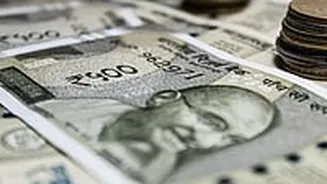

The rupee is back on the discussion table, as it has crossed the Rs 90/$ mark. In this market, any change in the value over thresholds like 87, 88, 89, and 90 is significant because once crossed, they
tend to remain benchmarks, and rarely do they get rolled back. Just what is happening in this market?
Let us look at the main triggers for this sentiment, which has turned quite negative. In general, one would expect the currency to move in the opposite direction to the dollar. The dollar has been weakening and will probably continue to do so as the Fed keeps lowering the interest rate. Most currencies have strengthened against the dollar, and the quick indicator here is the dollar index. As long as it is less than 100, the dollar is weaker in relative terms. In the past the rupee did strengthen when the dollar weakened. But not today.
The first trigger is the trade deal with the USA. The market is waiting to hear about the same. While it does look like it is on the anvil, there is no firm announcement on the same. This uncertainty is keeping the market jittery, as India faces one of the highest tariffs relative to other countries at 50%. It is another issue that any deal with the USA will necessarily mean some give and take, where there will be the contentious issue of agriculture and dairy that has to be sorted out in the form of imports from the USA.
The second has been the erratic behaviour of the FPIs. They have been in the withdrawal mode on the equity side. In September, they were sellers but became buyers in October and sellers in November and the first few days of December. This is notwithstanding the fact that corporate India has posted fairly good results for Q2. There are several reasons here. First, the quantum of investable funds tends to change with time and is spread over markets as funds reallocate their investments. Second, the Indian market may be overvalued in the sense that prices may be much higher than the ideal rule of thumb of a PE of 20, where the upside is limited. Third, while the Sensex and NIFTY rose by around 8% on an annual basis, other markets have done substantially better, thus leading to this reallocation. Last, as this is December, when they normally close their accounts, there is a tendency to book profits where they think gains are maximum (due to the overvaluation). Therefore, such selling activity is not prevalent in other markets but in India.
The third has been the current account deficit. It can be inferred that exports have slowed down in October and probably November, too, thus widening the deficit which has led to the depreciation.
Fourth, the RBI recently gave exporters more time to bring in their dollar earnings. This has been done to provide support to those who deal with the USA and have been impacted. But the consequence is that, as they held back their dollars, the supply of dollars in the country has come down. Meanwhile, importers have rushed in to purchase their dollars in anticipation of the rupee falling further. Now this becomes self-fulfilling from the point of view of depreciation, as automatically the demand and supply matrix gets distorted, where supply falls and demand increases.
Fifth, the market always looks to the RBI for direction. The RBI maintains that it does not target any exchange rate but intervenes when there is too much volatility. This is the starting part of the puzzle for the market. Every time the benchmark of 87 or 88 or 89 is breached, there is an expectation that the RBI will intervene. This happens through the open sale of dollars or taking positions in the forwards market. In the latter, the RBI sells forward (short position), which assuages the market. At times, it takes a position in the NDF market (non-deliverable forwards), which sends a strong signal to the market. Such actions were witnessed in October and November when the rupee breached the 88 and 89 levels. Now that it has crossed 90, there are expectations of some intervention.
Silence is interpreted differently by the market. It can be taken to mean that the RBI is satisfied with these proceedings as it helps exporters. This leads to positions being taken in the market by exporters and importers, which leads to a self-fulfilling decline again.
Last is the presence of speculators who can drive the currency in the same direction. This can happen either in the forwards or futures markets or, more likely, in the overseas NDF market, where only the final gain or loss has to be dealt with, with no physical dollars being bought or sold.
Hence, the situation is quite tricky today. There is no trade deal with the USA right now. The fundamentals in terms of trade and FPI are not positive, as the factors explained earlier are at play. This is driving the rupee down. However, the weaker dollar should exert countervailing power. But that is not happening, and the RBI is watching the field as the third umpire with limited intervention. This has all combined to make the market jittery, and it is not surprising that after passing 90, the market is now talking of not just 91 but even 92 by the year’s end.
What this will do is make all forex expenses dearer, like travel or education. Any imported goods will be expensive, including gold, which is on a bull run. The macro picture may not be affected much, as fuel prices are regulated by the government. But the individual prices of specific services or goods will become more expensive, thus upsetting household budgets to an extent.
The author is Chief Economist, Bank of Baroda and author of ‘Corporate Quirks: The Darker Side of the Sun’. Views are personal.