








Mumbai: Take-offs from Mumbai’s Chhatrapati Shivaji Maharaj International Airport (CSMIA) will now become quicker with the commissioning of Taxiway M. This significant airside infrastructure upgrade aims
to improve airside efficiency and operational resilience at one of the world’s busiest single-runway airports.
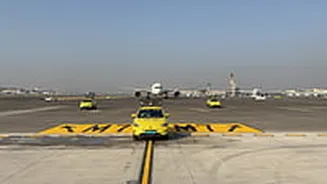
The commissioning of Taxiway M introduces a continuous parallel taxiway alongside CSMIA’s primary Runway 09/27. This will facilitate reduction of overall taxi time for aircrafts thereby improving arrival and departure flow during peak hours and thus improving airline on-time performance.
According to the airport operator, the new parallel Taxiway M will deliver operational benefits by enabling more efficient departure sequencing, allowing aircrafts to move onto the runway and take-off promptly, and allow aircrafts to queue on the taxiway while awaiting take-off clearance. This significantly improves departure capacity during peak periods while offering greater flexibility to air traffic controllers in managing airside traffic flows. The parallel taxiway also provides an alternate routing option during planned maintenance or unforeseen disruptions, enhancing overall operational resilience.
CSMIA handles an average of over 950 aircraft traffic movements (ATMs) daily, which is primarily supported by the main runway 09/27. This handles high-intensity operations supported historically by a single parallel taxi track (PTT) N–N1, which has remained in near-constant use due to the absence of an alternate full-length taxiway. Over time, sustained traffic levels and limited maintenance windows highlighted the need for an additional parallel taxiway to improve operational resilience and reduce dependency on a single taxi track.
Taxiway M was conceived to address this critical requirement but its implementation involved substantial complexity, as the alignment was constrained by the presence of the Aerodrome Rescue and Fire Fighting (ARFF) building located along the taxiway corridor. CSMIA relocated the ARFF facility and commissioned a temporary main fire station to ensure full-length connectivity of the taxiway and an uninterrupted CAT-10 emergency response capabilities, while concurrently commencing construction of the new permanent ARFF station.
Executed during the fourth control period (FCP), the project progressed in multiple phases. Phase 1 connected Runway 14–32, followed by Phase 2 where a continuous parallel taxiway network was established. Despite the challenges of working within a highly constrained airside environment, surrounded by active taxiways on three sides and a runway on the fourth, the project was delivered through meticulous planning, close coordination with stakeholders, and fast-track execution.
Taxiway M was commissioned on December 25, aligned with the Aeronautical Information Regulation and Control (AIRAC) cycle, after approximately 240 days of construction, including the monsoon period. From an environmental standpoint, reduced taxi distances and shorter ground holding times contribute to lower fuel consumption and reduced carbon emissions.
“With Taxiway M now operational, CSMIA is in a better position to manage current traffic volumes while creating headroom for future growth, ensuring smoother, safer and more reliable airport operations,” said a spokesperson.
To get details on exclusive and budget-friendly property deals in Mumbai & surrounding regions, do visit: https://budgetproperties.in/