
Bhopal (Madhya Pradesh): This year, Makar Sankranti is coinciding with Ekadashi, leaving most of us in doubt about the staple Sankranti Khichdi!
The big question being discussed in homes and on social media
is simple but important — should khichdi (which contains rice) be eaten on this Sankranti or not?
This rare coincidence of Makar Sankranti falling with Gyaras has come after nearly 11 years; the last time it occurred was in 2015.
Why this question?
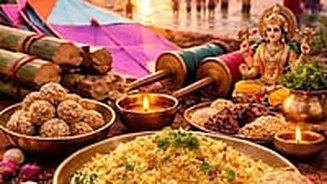
Usually, khichdi-- a combination of dal and rice, is a must on Makar Sankranti. It is shared with family, neighbours, and donated to the needy. But since Gyaras is a day when it is believed that consumption of rice and dishes made of rice must be avoided, sparking doubts among the people. Some are asking whether eating khichdi on this day is right, while others are choosing to wait.
According to the traditional calendar, Makar Sankranti falls on January 14, when the Sun enters the Capricorn sign and Uttarayan begins. This change is seen as very positive, as days become longer and winter slowly starts to fade.
Religious belief says that Sankranti is not just a festival, but a day of spiritual change.
This year, the auspicious time (muhurat) of Ekadashi is believed to last till 5:52 pm.
Because of this, many priests say that khichdi can be eaten after the muhurat ends, or people can celebrate Sankranti food rituals on January 15 instead of the 14th.
Thus, many families are planning to fly kites on the 14th but enjoy khichdi and donations on the 15th.
On the other hand, some astrologers have suggested to count the entire day-- January 14, as 'Ekadashi', instead of going muhurat wise, and stressed on avoid eating rice. They emphasised that while rice can be donated on the occasion as 'daan', its consumption must be refrained.