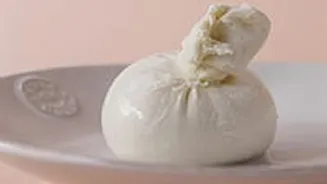






It looks like a dumpling from a distance and mozzarella di bufala once you get a little closer, but it is neither. It is the burrata, a cheese that was invented to ensure precious dairy didn’t go to waste
due to inclement weather. Approximately 100 years ago, cheesemaker Lorenzo Bianchino at the Bianchini farm in Andria mixed leftover mozzarella curds (stracciatella) with cream and parcelled them in small pockets made of stretched mozzarella.
The legend of the cheese has been passed down orally by the Bianchino family. It was recognised as an artisanal product of Andria in 1931 by Guida Gastronomica D’Italia. Burrata di Andria, since then, has a protected geographical indication; only burrata produced and packaged in the region of Apulia can be called so. The creamy pocket of cheese has become a global favourite since its inception. “It has become a $4 billion industry,” shares Flavel Monteiro, Co-author of 100 Years of Burrata, a book that pays homage to the cheese and chronicles the history of the Puglian cheese, its importance in the culinary landscape and recipes as shared by cheesemakers and chefs from all over the world. “The book is a tribute to Bianchino and modern artisans who continue the legacy a century later,” shares Sumit Govind Sharma, Co-author of the book.