
Failures are often romanticised as stepping stones to success. In science and technology, however, the romance wears thin when the same failure repeats itself. When a system that has long been trusted
begins to falter in precisely the same way, it ceases to be an accident and becomes a matter of grave concern. That is the uncomfortable question raised by the latest setback to India’s Polar Satellite Launch Vehicle (PSLV).
A trusted workhorse under scrutiny
For decades, the PSLV has been the Indian Space Research Organisation’s workhorse. It is the vehicle that built ISRO’s reputation for reliability, precision and value for money. Its impressive track record has not only served India’s scientific and strategic needs but has also fetched valuable foreign exchange. Technologically advanced countries—including Israel and even the United States—have entrusted ISRO with launching their satellites. That confidence was hard-earned and should not be taken lightly.
Repeated failure raises concern
Less than a year ago, a PSLV mission failed after developing a snag in its third stage, widely regarded as the most challenging phase of the flight. At the time, ISRO explained that the first two stages had performed flawlessly and that the anomaly was confined to the third stage. A detailed inquiry was ordered, though its findings were never made public. The implicit assurance was that lessons had been learnt and remedial action taken.
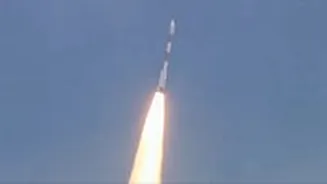
Monday’s PSLV-C62 mission has now revived those unresolved anxieties. Once again, a deviation was observed during the third stage, effectively derailing the mission. ISRO Chairman Dr V. Narayanan has said that data is being analysed and that details will be shared at the earliest, stopping short of formally declaring the mission a success or a failure. But the pattern is difficult to ignore.
High stakes mission
This was not a routine launch. The mission was meant to deploy the 1,696-kg EOS-N1 Earth observation satellite, 14 co-passenger satellites, and a KID capsule on a re-entry trajectory. Among them was Anvesha, a highly classified surveillance satellite developed by the DRDO to enhance India’s imaging and defence capabilities. Satellites from Nepal, Spain, France and Brazil were also part of the payload.
The precise monetary loss is impossible to calculate, but the strategic, scientific and commercial costs are undeniably high.
Credibility at risk
Two successive failures have inevitably dented ISRO’s credibility. In the competitive global launch market, reliability is the single most valuable currency. Any perception of recurring technical weakness will affect ISRO’s ability to attract future commercial missions.
This is precisely why ISRO must address the core issue with urgency and candour. Silence, delays or alibis will only deepen doubts. A clear, credible statement on what went wrong, what has been fixed, and what safeguards are now in place is essential.
The PSLV has been a symbol of dependability for India and the world. Restoring that trust must now be treated as a mission in itself.