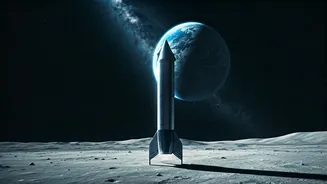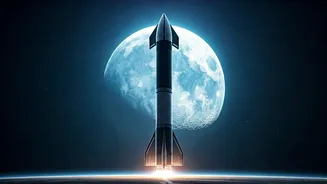



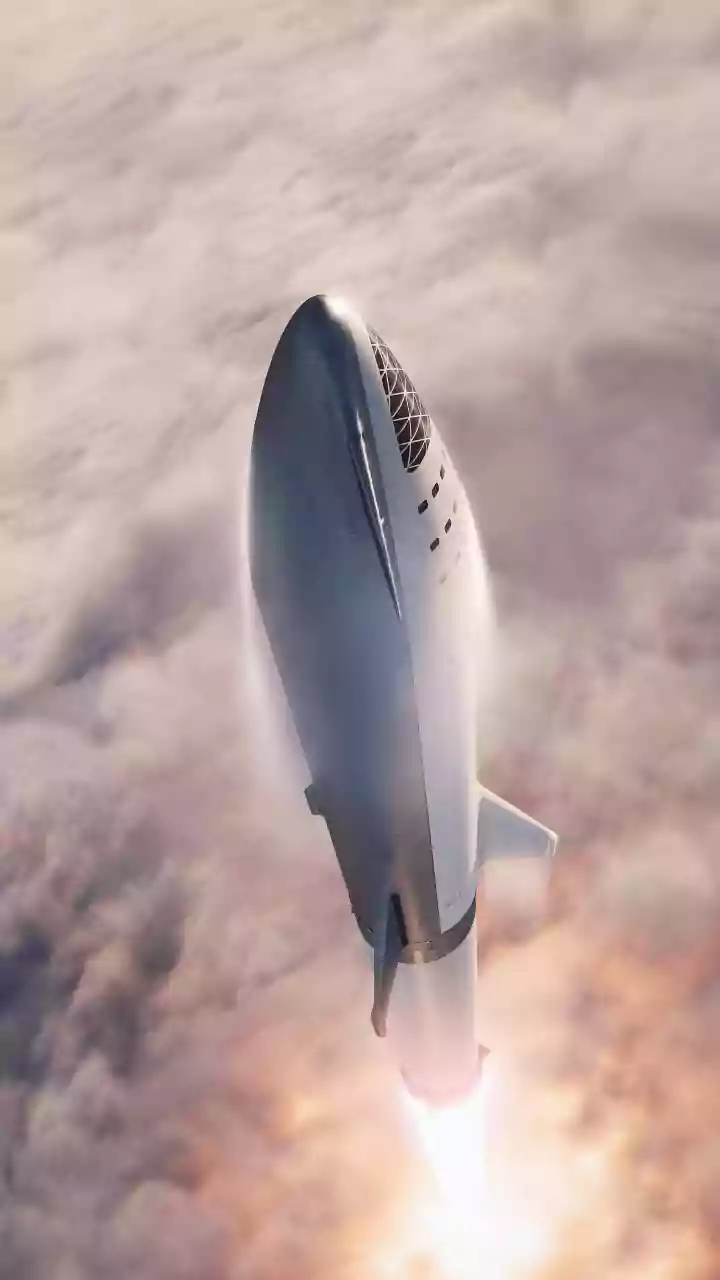






Elon Musk has announced a significant strategic shift for SpaceX, revealing that the company is now prioritising the construction of a self-growing city on the Moon over its long-stated Mars colonisation
goals, citing dramatically faster development timelines and launch windows.
Elon Musk says Moon first, Mars later
Speaking about the revised strategy, Musk explained that a lunar city could be achieved 'in less than 10 years, whereas Mars would take 20+ years.' The SpaceX and xAI founder emphasised that this pivot doesn't abandon the company's ultimate mission to extend consciousness and life beyond Earth - it simply reorders the priorities to achieve results faster.
"The mission of SpaceX remains the same: extend consciousness and life as we know it to the stars," Musk stated, but added that practical considerations now favor the Moon as the immediate focus.
Launch window advantages drive decision
The fundamental advantage of lunar development, according to Musk, lies in launch frequency. While Mars missions are constrained by planetary alignment occurring only every 26 months - with each journey taking approximately six months - lunar missions face no such restrictions.
"We can launch to the Moon every 10 days with a 2-day trip time," Musk explained. This 13-fold increase in launch opportunities would allow SpaceX to "iterate much faster to complete a Moon city than a Mars city."
Mars plans remain on horizon
Despite the strategic reorientation, Musk confirmed that Mars colonisation remains firmly in SpaceX's plans. The company intends to begin Mars city construction 'in about 5 to 7 years,' but characterised the Moon as the 'overriding priority' for 'securing the future of civilisation'.
Space-based data centers on the horizon
In related remarks about humanity's expansion into space, Musk recently also made a bold prediction about the economics of orbital infrastructure. He stated that data centers would become "the cheapest in space in the next three years," suggesting that the cost advantages of space-based computing could materialise far sooner than many industry observers expect.
The claim points to potential synergies between SpaceX's launch capabilities and the massive energy and cooling requirements of modern AI data centres - a sector where Musk's xAI company is heavily invested.
Reactions to his ambitious Moon mission are as follows: