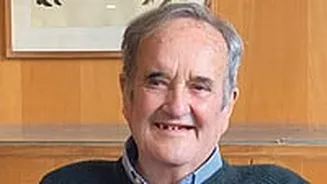



New Delhi: Veteran journalist and legendary broadcaster Mark Tully, long regarded as the most recognisable voice of the BBC in the Indian subcontinent, passed away on Saturday following a brief illness.
He was 90.
Tully’s health condition had sparked concern earlier in the day after senior journalist Anurag Chaturvedi posted on X that he had been hospitalised in a Delhi hospital and was in critical condition. The news of his passing has since triggered an outpouring of tributes from journalists, academics and political leaders across India.
Born in Britain, Mark Tully made India his home and became a defining chronicler of its politics, society and transformation for over three decades. He served as the BBC’s New Delhi Bureau Chief for 20 years and worked with the broadcaster for nearly 30 years before resigning in July 1994. Through landmark reportage on major political developments and grassroots realities, Tully earned deep credibility among Indian audiences.
The UNESCO Courier once described him as a “living witness” to the era when radio was the primary medium of mass communication, telephone connectivity was unreliable and recorded reports were physically transported on magnetic tapes. “For over a quarter of a century, one of the most recognised and trusted radio voices in India was that of Mark Tully,” the publication noted.
Beyond broadcasting, Tully was an acclaimed author who wrote nine books, including the widely admired No Full Stops in India, praised for its perceptive analysis of India’s evolving social and political fabric.
Tributes poured in on social media. JNU professor Amithabh Mattoo called him “a towering voice in journalism and a bridge between cultures,” while journalist Vir Sanghvi described him as “the greatest radio journalist of his generation.”
Congress leader Pawan Khera said generations grew up listening to his voice and reading his books. Former journalist and MP Sagarika Ghosh remembered him as a fearless truth-teller who reported on India “with care and love.”
Mark Tully’s passing marks the end of an era in journalism, one defined by depth, credibility and unwavering commitment to storytelling.