
After stirring controversy last week by stating that he may have received far fewer work offers over the past eight years due to communal reasons, music maestro A. R. Rahman made a quietly powerful statement
on Republic Day. He opened his live performance with “Raghupati Raghav Raja Ram… Ishwar Allah Tero Naam, Sabko Sanmati De Bhagwan.” a gentle yet potent choice, and a fitting one, given that the bhajan was among Gandhiji’s favourites.
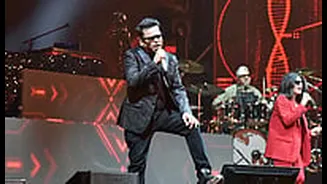
Rahman, along with his 32-member orchestra, performed at a special event showcasing the silent film Gandhi Talks, soon to release later this week on 30 January, the day that marks the Mahatma’s death anniversary. In his inimitable style, the musical genius moved an intimate audience, explaining the intricate and demanding process of composing for a silent film, a format where music must shoulder the entire emotional and narrative weight.
After the cult classic Pushpak starring Kamal Haasan, released nearly forty years ago in 1987, Bollywood can finally boast of another true silent film. Directed by Kishor Belekar, known for his work in Marathi cinema, Gandhi Talks attempts to examine how Mahatma Gandhi’s values and principles appear increasingly obsolete in contemporary India. The film follows Mahadev, a struggling young graduate trying to make a living, played by Tamil cinema powerhouse Vijay Sethupathi. The cast also includes Arvind Swamy, the former chocolate-boy of Indian cinema, and Aditi Rao Hydari.
Rahman’s legendary score, an eclectic blend of genres, gives voice and emotion to the characters and situations in the absence of dialogue. His exclusive performance at Mumbai’s Jio World Convention Center was proof yet again that music needs no words. Even an initially “thanda” audience, made restless by the long wait before the curtain was raised, was soon swaying in their seats to his infectious melodies, a testament to Rahman’s riveting magic.
What proved more surprising, however, was a moment when the emcee asked the audience to raise their hands if they were admirers of Gandhiji. Only a handful responded. Whether this reflected a collectively blasé crowd or signaled a deeper cultural shift is a rhetoric growing increasingly louder in today’s India.