








Over the past decade, successive Narendra Modi governments have launched and expanded a range of flagship schemes aimed at improving financial inclusion, sanitation, housing, healthcare, cooking fuel access,
agriculture, drinking water and manufacturing. Many of these programmes have reached millions of households, while their implementation has also exposed gaps between coverage, access and actual outcomes.
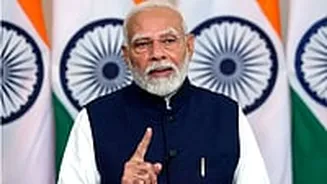
As Prime Minister Narendra Modi marks his 76th birthday, here is a look at 10 major schemes and initiatives associated with his governments, what they have achieved, where challenges remain and how they have affected people's lives.
1. Pradhan Mantri Jan Dhan Yojana
Launched in 2014, the Pradhan Mantri Jan Dhan Yojana (PMJDY) sought to bring unbanked people into the formal financial system through basic bank accounts, RuPay cards, insurance, pensions and access to credit. The scale of expansion has been substantial.
The gain: Jan Dhan accounts created the financial infrastructure through which government benefits can be transferred directly to beneficiaries. The scheme has also become an important component of India's wider Jan Dhan-Aadhaar-Mobile system.
The gap: Opening an account does not automatically mean meaningful financial inclusion. The continued challenge is ensuring that accounts are actively used for savings, credit, insurance and other financial services rather than merely functioning as channels for government transfers.
Real-world impact: For millions of previously unbanked households, having a formal bank account has reduced the need to depend entirely on cash-based transactions and intermediaries.
2. Swachh Bharat Mission
Launched in 2014, the Swachh Bharat Mission put sanitation and toilet construction at the centre of the government's development agenda.
Government data says more than 12 crore individual household toilets have been constructed and that rural sanitation coverage increased from 39% in 2014 to 100% by 2019. By March 2026, more than five lakh villages had achieved the ODF Plus Model status, which includes solid and liquid waste management.
The gain: Toilet access expanded dramatically, while sanitation became a much more prominent part of public policy and public discourse.
The gap: Toilet construction and actual toilet use are not the same thing. A 2024 study of the programme in rural Punjab found that 24–28% of households reported that at least one member still practised open defecation, while more than 72% of Gram Panchayats had visible signs of the practice. The study also found improvements in hygiene awareness.
Real-world impact: The programme changed the physical sanitation landscape in many parts of rural India, but sustaining behavioural change and ensuring waste-management infrastructure remain important implementation challenges.
3. Make In India Initiative
Introduced in 2014, Make in India was designed to increase manufacturing, attract investment and position India as a major production hub.
The initiative helped establish manufacturing as a central component of the government's economic strategy. Its later policy architecture was supplemented by measures such as the Production Linked Incentive programme.
The gain: India has seen significant expansion in sectors such as electronics and mobile-phone manufacturing. Under the broader PLI framework, the government reported more than ₹2.16 lakh crore in cumulative investment, ₹20.41 lakh crore in production/sales and over ₹8.3 lakh crore in exports by December 2025.
The gap: The manufacturing story remains uneven across sectors, and increasing domestic production does not necessarily mean that all components or higher-value activities are being manufactured domestically. Electronics, for instance, has made major gains in assembly, while deeper localisation of components remains a continuing policy objective.
Real-world impact: Consumers increasingly encounter products labelled “Made in India”, while manufacturing clusters and supply chains have expanded. The larger test remains how much of this translates into sustained, broad-based employment and domestic value addition.
4. Digital India
Launched in 2015, Digital India aimed to expand digital infrastructure and make government services more accessible through technology.
The programme's impact has extended far beyond government websites. Digital public infrastructure built around Aadhaar, mobile connectivity, UPI and platforms such as DigiLocker has changed how Indians make payments and access services.
UPI transactions reached ₹23.25 lakh crore in December 2024, compared with ₹708 crore in December 2016. The number of banks live on UPI also increased from 35 in December 2016 to 641 by December 2024.
The gain: Digital payments have become part of everyday economic activity, from small shopkeepers accepting QR-code payments to consumers transferring money instantly.
The gap: Digital access is still affected by connectivity, digital literacy and affordability, particularly among sections of the population less comfortable with technology.
Real-world impact: Digital transactions have moved from being primarily an urban convenience to an increasingly routine part of India's wider economy.
5. Pradhan Mantri Ujjwala Yojana
The Pradhan Mantri Ujjwala Yojana, launched in 2016, sought to provide LPG connections to women from poor households and reduce dependence on traditional cooking fuels.
The programme significantly expanded LPG access among poorer households. Research has also found health and time-saving benefits associated with LPG use. A 2024 study reported reduced respiratory illness among surveyed villagers and found that around 99% of LPG users reported spending less time cooking.
The gain: The scheme addressed the initial barrier of obtaining an LPG connection for millions of households.
The gap: Affordability of refills has remained a major issue. The same 2024 study found that more than 47% of LPG users identified refill costs as a limiting factor. Another 2024 study found that PMUY produced only a modest 2.1-percentage-point increase in LPG consumption among intended beneficiaries, highlighting the difficulty of sustaining regular LPG use after the initial connection.
Real-world impact: Ujjwala changed access to clean cooking fuel, but the experience also demonstrates the difference between providing a connection and ensuring households can afford to use it regularly.
6. Pradhan Mantri Awas Yojana
PMAY was launched in 2015 with the objective of expanding access to affordable housing for poor and lower-income households in rural and urban India.
As of August 2026, 3.12 crore houses had been completed under PMAY-Gramin against a total allocation of 4.18 crore houses. In the urban programme, more than 1 crore houses had been completed and delivered by August 2026.
The gain: The programme has created a large pipeline of subsidised housing and has linked housing delivery with other amenities such as toilets, electricity, LPG and tap-water connections.
The gap: Implementation varies between states and projects. A 2025 CAG performance audit in Uttar Pradesh, for example, found that 98.47% of sanctioned PMAY-G houses covered by its audit had been completed, but also identified deficiencies in beneficiary selection, financial management and implementation.
Real-world impact: For families who received completed houses, the programme represents a tangible shift from insecure housing to a permanent dwelling. The continuing challenge is ensuring quality, timely completion and access to accompanying services.
7. Ayushman Bharat
Launched in 2018, Ayushman Bharat's PM-JAY component was designed to provide cashless hospitalisation cover to eligible families, while the broader programme also included the Health and Wellness Centre component.
The government reported in 2025 that Ayushman Bharat covered around 55 crore people, with benefits subsequently extended to all citizens aged 70 and above under the Ayushman Vay Vandana expansion.
The gain: The scheme has created a large publicly funded health-insurance mechanism and expanded access to empanelled hospitals for eligible beneficiaries.
The gap: Insurance coverage does not by itself resolve India's wider healthcare challenges, including the availability and quality of public healthcare infrastructure, uneven access between regions and the cost of treatment outside covered services.
Real-world impact: For beneficiaries who use PM-JAY for covered procedures, the scheme can reduce the immediate financial burden of hospitalisation. Its broader effectiveness depends on hospital availability, awareness, implementation and the quality of care received.
8. PM-KISAN
Introduced in 2019, PM-KISAN provides ₹6,000 annually to eligible landholding farmer families through three direct transfers.
By March 2026, the government had disbursed more than ₹4.27 lakh crore through 22 instalments, with more than 9.35 crore farmers receiving the 21st instalment in November 2025.
The gain: The scheme provides predictable direct income support without requiring farmers to apply for individual subsidies for every payment.
The gap: Its eligibility structure is linked to landholding, which means landless agricultural labourers and some cultivators without qualifying land records do not benefit in the same manner.
Real-world impact: ₹6,000 a year is relatively modest compared with the overall cost of cultivation, but regular transfers can help eligible farmers meet short-term household or agricultural expenses. Studies cited by the Agriculture Ministry have also reported effects on credit constraints and agricultural investment.
9. Jal Jeevan Mission
The Jal Jeevan Mission, launched in 2019, aimed to provide piped drinking water to rural households. Its expansion has been substantial, but the scheme also illustrates why infrastructure coverage must be distinguished from actual service delivery.
The gain: The rapid expansion of household tap connections has brought piped-water infrastructure to millions of rural homes.
The gap: A tap connection is useful only if water is available, adequate, regular and safe. The functionality assessment, therefore highlights the remaining challenge of maintaining the infrastructure and ensuring reliable service.
Real-world impact: In households receiving regular piped water, the potential benefits include reduced time spent collecting water and improved convenience. The remaining challenge is turning physical connections into consistently reliable water supply.
10. Production Linked Incentive Scheme
The PLI scheme, introduced from 2020 onwards across 14 sectors, represents a shift from broad manufacturing promotion towards incentives linked to actual production and investment.
By December 2025, the government reported cumulative investment of more than ₹2.16 lakh crore, production/sales exceeding ₹20.41 lakh crore, exports above ₹8.3 lakh crore and more than 14.39 lakh direct and indirect jobs across the 14 sectors.
The gain: Electronics, pharmaceuticals, telecom and other sectors have recorded significant investment and capacity expansion under the programme.
The gap: Government-reported investment and production numbers measure programme activity, but they do not by themselves establish how much of the growth would not have occurred without PLI incentives. The longer-term question is whether companies remain competitive after incentives taper and whether supply chains deepen beyond assembly.
Real-world impact: PLI has contributed to India's effort to build domestic manufacturing capacity and integrate more deeply with global supply chains, particularly in electronics.