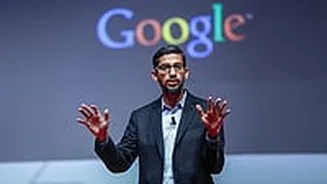







Google CEO Sundar Pichai has pushed back against the idea that the company missed the early wave of AI chatbots, arguing instead that Google chose not to release its technology first. Speaking on a podcast
with John Collison, Pichai acknowledged that the company had already developed systems like modern chatbots long before they would see the light of day, but that they were withheld due to quality and safety issues.
Pichai pointed to the company's LaMDA system as evidence, referencing the 2022 scandal of former Google engineer Blake Lemoine, who publicly claimed the chatbot had become sentient. Pichai used the incident to demonstrate that Google's internal conversational AI was already sophisticated years ago, but not ready for public deployment.
Safety standards trumped speed
Pichai said that Google had already created a conversational AI that worked internally but was not at the stage of being used publicly. The system, he remarked, still gave answers which might be dangerous or inconsistent. He explained that the model lacked sufficient reinforcement learning with human feedback (RLHF), a critical process for improving AI safety and accuracy.
The CEO emphasised that Google's quality standards, particularly for search-related products, prevented an earlier launch. His comments suggest the company prioritized trust and safety over racing competitors to market.
ChatGPT triggered crisis response
When OpenAI launched ChatGPT in late 2022, the product's viral success reportedly triggered what The New York Times reported that the viral success led to a so-called code red within Google. Pichai allegedly restructured teams in the areas of AI research, product, and safety to expedite the reaction of the firm.
In early 2023, Google replied with the release of Bard, which was, however, criticised due to its inaccuracies and rushed implementation. The company then rebranded Bard to Gemini, making it its flagship AI platform.
Looking back, Pichai framed Google's delayed entry not as failure but strategy, comparing it to past successful late entries like YouTube. Three years on, he maintains Google didn't lag in innovation—it simply waited until the technology met its standards.