
Bhopal (Madhya Pradesh): A team of the Global Tiger Forum (GTF) is expected to visit Gandhi Sagar Sanctuary in Mandsaur either in the last week of this month or in February to study the presence of the rare
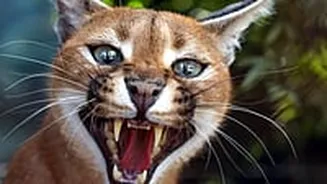
caracal wild cat.
The move follows an accidental sighting of the elusive caracal on camera traps installed to record the movement of cheetahs. The footage drew the attention of the Global Tiger Forum, prompting plans for a detailed study.
Sanjay Raikhere, in-charge of Gandhi Sagar Sanctuary, told Free Press that camera traps were installed at different locations inside the sanctuary to record the movement of three cheetahs brought from Kuno National Park . A camera installed on the western side of the sanctuary captured the movement of a caracal on June 29. The animal’s movement was recorded repeatedly on the cameras till July, the official said.
Following this, a team of the Global Tiger Forum is scheduled to visit the sanctuary to ascertain the presence of the caracal. The study will help determine whether more than one caracal is present in the sanctuary and, if so, their likely number.
No earlier documented presence in MP
Sources said that prior to the sighting at Gandhi Sagar Sanctuary, there was no documented evidence of the physical presence of the caracal in Madhya Pradesh. While people, particularly in the Chambal belt, had often claimed sightings of the animal, no proof was available.
About the caracal
The caracal is a slender, medium-sized wild cat with tufted ears and long legs and. In Africa, it is widely distributed south of the Sahara. In India, it is primarily found in Rajasthan. About 80 % of its diet consists of small mammals and it tends to focus on most abundant prey species. Known for its remarkable speed and agility, the caracal can bring down prey two to three times its size and can leap up to 10 feet in the air to catch birds in flight.
Improved habitat may have attracted the species
After strict security arrangements were put in place in Gandhi Sagar Sanctuary following the rollout of the cheetah project, the prey base in the area has seen a sharp rise.
With almost no human interference and an abundance of wild animal species, the improved habitat conditions may have attracted the caracal to make the sanctuary its home.