
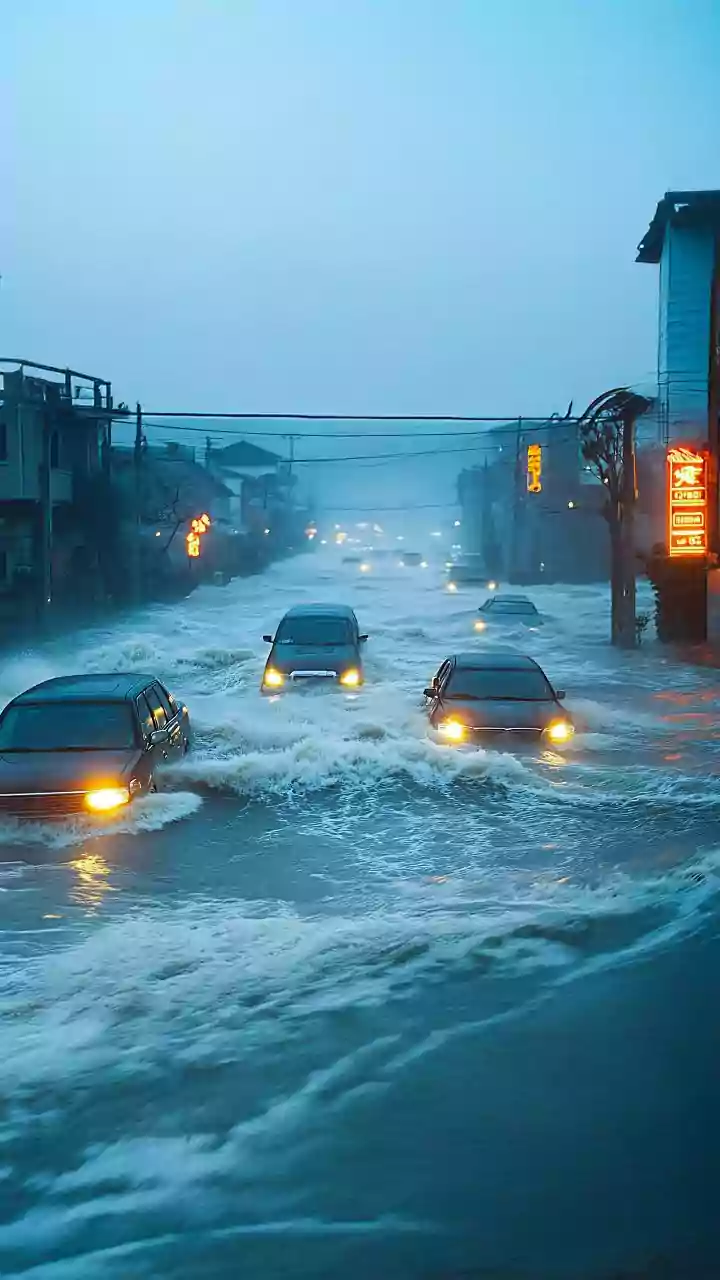




The devastating flash floods that struck Nepal’s Rasuwa district have brought renewed attention to a growing threat in the Himalayas: rapidly changing glaciers and increasingly unstable high-altitude terrain.
Scientists are still investigating the precise chain of events behind the disaster. However, preliminary assessments suggest that an ice-rock avalanche from a high-altitude area may have triggered the sudden surge.
A large mass of ice and rock is believed to have entered the Lhende Khola, a tributary of the Bhote Koshi River. The impact may have unleashed a torrent carrying water, sediment and huge boulders downstream, causing the river system to rise dramatically within minutes.
Rain where snow once fell
Experts say the immediate trigger may be a geological event, but the changing Himalayan climate could be making such events more likely.
One particularly worrying development is rainfall at elevations above 4,000 metres, where snowfall would traditionally be expected.
A scientist from the Wadia Institute of Himalayan Geology told Firstpost that rising temperatures could explain the shift from snow to rain at these elevations. Warmer conditions can also accelerate glacier retreat and weaken frozen ground, leaving mountain slopes increasingly vulnerable.
When rain falls on snow-free and unstable terrain, it can rapidly increase runoff and loosen rocks and debris. This can turn a relatively local mountain collapse into a destructive downstream flood.
Glacier loss has accelerated
The warning signs were highlighted months before the Nepal disaster.
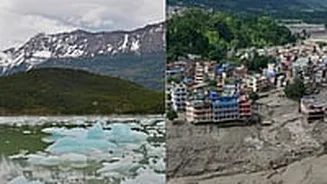
Two reports released by the International Centre for Integrated Mountain Development (ICIMOD) in March found that glaciers across the Hindu Kush Himalaya have been losing ice at an accelerating rate.
Between 1990 and 2020, glaciers in the region lost around 12 per cent of their total area and 9 per cent of their estimated ice reserves. Up to 27 metres of glacier thickness has been lost since 1975 in some areas.
ICIMOD’s HKH Glacier Outlook 2026 found that glacier wastage had doubled since 2000. Researchers warned that parts of the Himalayan cryosphere could be approaching critical tipping points that may lead to irreversible retreat.
Billions depend on himalayan glaciers
The Hindu Kush Himalaya contains more than 63,000 glaciers spread across over 55,000 square kilometres. These glaciers feed major river systems, including the Indus, Ganga and Brahmaputra, supporting water, food, energy and livelihoods across Asia.
Mohd Farooq Azam, senior cryosphere specialist at ICIMOD, told PTI that shrinking snow cover and retreating glaciers are exposing more barren rock, which absorbs greater amounts of heat and can make mountain slopes more vulnerable.
“It is related to climate change because the snow covers are reducing, the glaciers are receding, more rocky or barren areas are exposed - they absorb more heat which makes the slopes more vulnerable,” Azam said.
The Nepal floods therefore offer a stark glimpse of a wider Himalayan problem. Climate change may not be responsible for every individual flood or avalanche, but rising temperatures, declining snow cover, glacier retreat and permafrost degradation are altering the mountains in ways that could make sudden disasters more frequent and harder to predict.