









Indore (Madhya Pradesh): More than 500 human–wildlife conflict incidents and over 300 wildlife rescue operations have been reported in Indore in just three years. For Indore, these numbers are a wake-up
call. They mark a shift in how a rapidly growing city must govern wildlife in urbanising forest landscapes.
For a single forest division, the scale is unusually high, comparable to conflict levels typically seen in far larger districts. Wildlife encounters here are no longer sporadic disruptions — they have become a persistent urban reality.
Sharing the numbers, Pradeep Mishra, IFS, divisional forest officer, Indore, said, “Wildlife encounters in Indore are no longer episodic events. They have become a structural feature of the city’s landscape.”
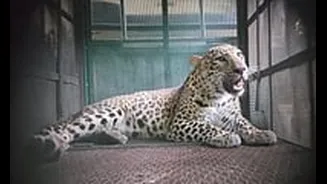
The leopard captured near Sahara City early Wednesday was not treated as an isolated emergency. It was one more data point in a pattern that is reshaping the city’s approach to human–wildlife coexistence.
Why the numbers matter
In most urban-adjacent forest divisions, conflicts occur intermittently, often triggered by seasonal movement or isolated habitat disturbance. Indore’s record — averaging one conflict incident every two days and nearly two rescues every week — puts it in a different league.
“Human–wildlife interaction in Indore is no longer an exception; it is part of everyday city life,” Mishra said.
When rescue is no longer the default
Hundreds of conflict calls have shown that not every sighting should trigger a rescue. Indiscriminate intervention stresses animals, disrupts movement, and fuels repeated conflict. A rescue-first approach works in isolated incidents, but becomes unsustainable when encounters are frequent.
“The challenge has shifted from reacting to emergencies to deciding when not to intervene,” Mishra said.
From incident overload to coexistence planning
The Integrated Human–Wildlife Coexistence Model (IHWCM), a state award-winning framework, treats conflict as predictable rather than accidental. Multi-year data from over 500 incidents and 300 rescues — including location, timing, species, and land-use patterns — now guides operations. Rescues are stabilising tools, deployed only when human safety or animal welfare is genuinely at risk.
Technology as a force multiplier
Camera traps, thermal drones, and GIS-based mapping track wildlife along forest–urban interfaces, enabling pre-emptive action and targeted patrolling. Data also revealed that areas with repeated conflict are often vulnerable to illegal wildlife activity.
“Unmanaged conflict creates conditions for wildlife crime,” Mishra said. A recent leopard poaching case, where the animal’s paws were illegally removed, underscored the stakes.
What Indore signals for urban India
MP’s conservation success has recovered large carnivore populations, earning it the titles “Tiger State” and “Leopard State.” At the same time, cities like Indore are expanding into forest fringes. The overlap is unavoidable.
“When a single city records hundreds of wildlife encounters within a few years, coexistence can no longer be temporary,” Mishra said. “It demands informed public behaviour, restraint during sightings, and acceptance that wildlife is part of urban living.”
Designing coexistence, not reacting to crisis
Indore’s approach is defined not by the number of rescues, but by letting data drive governance reform.
“Five hundred conflict incidents in three years leave little room for ambiguity. Coexistence cannot be accidental, and it cannot be managed through emergency response alone,” Mishra said.
As cities grow into ecological landscapes, Indore offers a clear lesson: when leopards become urban neighbours, wildlife governance must evolve — from reaction to design, grounded in data, discipline, technology, and public trust.