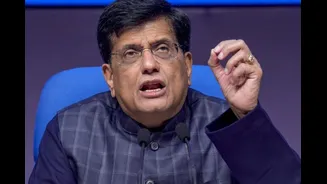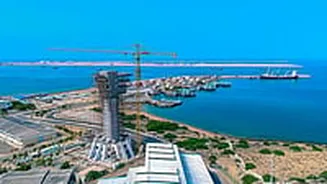

New Delhi: MEA spokesperson Randhir Jaiswal raised eyebrows when he did not deny a recent report that India had exited the Chabahar project in Iran. According to a report in the Economic Times, which quoted
a government source, India had transferred about $120 million to Iran to fully liquidate its financial commitment for developing the Chabahar port.
This payout was completed last September before the US reinstated sanctions on the port. Asked about the issue, Jaiswal stated in a press briefing that “on October 28, 2025 the US Treasury Department had issued a letter outlining the guidance regarding the conditional sanctions waiver, which is valid till April 26. We remain engaged with the US side in working out this arrangement.”
While there is no official confirmation yet of India’s exit from the port project, the MEA’s spokesperson’s silence on the matter has raised questions. Negotiations around the port began in 2003 but the matter was pushed by Prime Minister Modi in the second half of 2014. According to a note issued by the Ministry of Ports in 2019, India-Iran interaction resulted in the signing of a MoU between the two countries for the development of the Chabahar port in May 2015.
“This MoU translated into a formal 10- year Contract for Equipping and Operating the Chabahar Port, which was executed on May 23, 2016, during Prime Minister Shri Narendra Modi’s visit to Tehran,” the note said. Prime Minister Modi has touted the Chabahar port project as one of his “major achievements,” and the government has also made clear on several occasions that any decision regarding the port would not be taken under the pressure of a third party.
Experts believe that exiting the port project would be a big mistake on the part of India, as the Chabahar port project is a strategic counter to Pakistan’s Chinese-run Gwadar project. The project will enable India to access Afghanistan and Central Asia by bypassing Pakistan and also gives India access to the Strait of Hormuz. Strategic affairs analyst Brahma Chellaney wrote on X.
“This retreat is all the more striking given that in May 2024, India and Iran formally signed a 10- year agreement granting India the right to develop, equip and operate the Shahid Beheshti terminal at Chabahar. The contract, concluded between Indian Ports Global Ltd (IPGL) and Iran’s Ports and Maritime Organization (PMO), replaced earlier short-term arrangements and appeared to lock in India’s long-term strategic and commercial stake in the port. It provided India operational control over the general cargo and container terminal for a decade, with an option for renewal.”
Chellaney concludes that the US temporary sanctions waiver for six months, which was to conclude in April this year, was simply to allow New Delhi to wind up operations. “Last September, the U.S. gratuitously withdrew the Chabahar-specific sanctions exemption it had first granted India in 2018. The following month, Washington issued a temporary sixmonth waiver — not to protect India’s investment, but merely to allow New Delhi to wind down its operations by April 2026. This is how the U.S. chooses to build, and assert, leverage over India.”