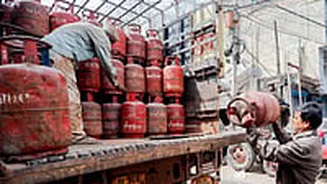





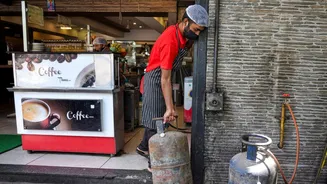


The surge of anxiety over LPG scarcity as a consequence of the US-Israel war on Iran is a good moment to review what India has done with two neglected alternatives—biogas and solar thermal energy.
Biogas
in chemically clean form, produced from various wastes and then compressed, is a policy priority to cut fossil fuel demand. It would be distributed, the Union government said, through pipelines and containers, just like other fuels.
Producing biogas was not going to be difficult, given the plentiful availability of biomass from a variety of sources, starting with cattle and farming. There was high-quality solar potential across much of the country, offering another alternative.
Missed opportunities in scaling solutions
By this token, India should have developed biogas units and solar cookers at scale, tested them for efficiency and promoted them with the same enthusiasm as grid-connected solar photovoltaics. The Union government listed 15 sources of biomass to produce biogas, including food and municipal solid waste, coffee, rice straw, sewage, chicken, and dairy. But the system clearly did not go mainstream.
India is the co-founder, along with France, of the International Solar Alliance headquartered in Haryana. Ten years after it was launched at the Paris climate conference of 2015, it should have witnessed high-quality work on replicable solar cooker models that would drive costs down and mitigate greenhouse gas emissions. But the ISA website has nothing on this. Neither does the renewables market offer much for those intending to shift to solar alternatives.
Impact of LPG disruption on daily life
In the absence of scaled technologies and solutions, the Iran war created a violent resource shock for India, which has remained sanguine for decades about its performance on environmental sustainability and circularity. Now, war has shut many hotels, hostels, wedding halls, and convention centres, while senior living communities are forced to scramble for alternatives to LPG. Options such as coal and kerosene have largely disappeared in urban India in the era of LPG cylinders and piped gas. As a result, kitchens serving bulk meals have travelled back in time to firewood.
Potential of biogas across scales
There are small, medium, or large biogas plants that produce methane, a substitute for LPG, to be deployed at various scales, ranging from individual households to communities and industry. The low-grade methane they produce can be upgraded and compressed for use in cooking, automotive use, and industrial feedstock, according to the Petroleum Ministry.
Backyard solution: A household unit for uncompressed biogas can generate about 10 cubic metres of gas in a day, usable as it exists, while a community-level facility can raise output to 1,000 cubic metres. Industrial-scale plants linked to wastewater treatment, distilleries, pulp, paper, sugar, and food processing exceed 5,000 cubic metres.
Household biogas plants are advertised by some manufacturers of fibre-reinforced plastic tanks at about Rs 55,000 each, with a suggested biomass input of 10 to 12 kg of kitchen waste and water to produce about half a kilogram equivalent of LPG in a day. Clearly, such technologies can be promoted to institutions such as senior living communities.
Cow dung, a major fuel in its original form in rural India, tops a daily volume of 3 million tonnes, according to NITI Aayog. Independent researchers estimate that India could generate 18,240 million cubic metres of biogas annually, although data on the state of play is scarce.
Policy gaps and slow progress
The NITI Aayog came up with business models for biogas production, but a review by the Petroleum and Natural Gas Regulatory Board (PNGRB) last year paints a dismal picture on performance.
While standalone biogas units suit individual houses, the official policy envisages the production of compressed biogas for injection into city gas distribution and natural gas pipelines after cleaning it up to Bureau of Indian Standards specifications (IS 16087:2016: Biogas (Biomethane)). Only parts of a few cities are linked to the pipelines and distribution networks today; the gas also attracts GST or VAT depending on its nature.
On the production front, many CBG plants utilise only 20% to 60% of installed capacity, the PNGRB says. Even more disappointing is the slow progress on adding more facilities—160 units have been commissioned, 244 remain under construction, and 744 remain on paper, all of which should have chipped in with 7.6 million cubic metres of biogas per day.
With a well-functioning biogas industry, the emphasis on imported LPG would be sharply reduced, resilience strengthened, and people spared of severe availability and price shocks.
Solar cooker gap and cultural challenges
Cloudy skies: The solar cooker story is equally disappointing in the home of the International Solar Alliance. There is a general reluctance to adopt solar thermal cooking because food preparation is culturally an indoor activity. That problem is overcome by large institutions, such as temples, and religious institutions, such as the Shirdi Sai Baba shrine, by harnessing the sun to produce steam that is piped into kitchens for meal preparation. Individual homes are also in search of a viable solar thermal cooker.
There is great scope to produce a modern, compact, and foldable solar cooker of the kind used by outdoor campers in Western countries, where the objective is to avoid lighting fires in forests. Such designs would go beyond the traditional ‘black box’ solar cooker, which is not very efficient and understandably failed to go mainstream in India.
Need for innovation and manufacturing push
A couple of years ago, IndianOil showed off an indoor patented solar cooker, Surya Nutan, that uses solar photovoltaic power to run and had reportedly been validated in the field in five North Indian sites, including New Delhi. But there was obviously no effort to mass produce or popularise it across the country. It is ironic that solar thermal cookers of modern design, which use hybrid fuel sources (including battery power), can be ordered from the US via online platforms, but there are no Indian products to buy. All that the Union government has to do is open source the indigenous design and invite large-scale manufacturing, meeting the BIS standards.
With some political will to Make in India, the future could witness an India-designed solar cooker and standalone biogas plant bringing energy independence and clean fuel at low cost to millions, not just at home but in all low-income countries. Will the Iran war provide the impetus?
The writer is a journalist focusing on sustainability and development policy.