







On November 18, 2001, Vijay and Sadhana Phalnikar made a desperate call for an ambulance as their only son, Vaibhav, faced a medical emergency from cancer. The ambulance didn’t arrive in time at their Warje
Malwadi home in Pune. In their darkest hour of grief, the couple made a promise: no other family in Pune’s underserved villages would face the same tragedy.
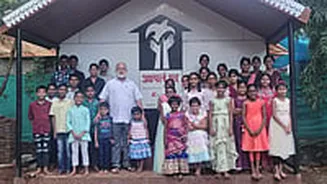
Over two decades later, that promise has blossomed into Apla Ghar, a charitable trust operating five projects that serve orphaned children, destitute elderly, and thousands of rural patients who otherwise have very limited resources to seek help.
A Promise Born from Loss
Vijay Phalnikar knows what it means to be forgotten by society. Born in Nagpur, he spent his early years in a Mumbai orphanage, surviving on leftover food near the Mumbadevi and neighbouring temples. “Being an orphan, I initially lived in the temple premises, surviving on scraps,” he recalls. “However, Yashwantrao Kale, who I consider my guru, saw my struggle and enrolled me in the Children’s Aid Society, which brought my life on track.”
That second chance shaped everything that followed. Phalnikar built a stable life, working for two years at Nagpur Doordarshan before joining Balchitravani Pune, where he spent 29 years before opting for voluntary retirement in 2005. He married Sadhana and together had a son, Vaibhav.
When the Ambulance Failed
Vaibhav was diagnosed with cancer while the family lived in Pune’s Warje Malwadi area. This revelation turned their world upside down, but nothing prepared them for November 18, 2001.
“We faced a medical emergency and called an ambulance, but it failed to arrive on time. And with the turn of events, unfortunately, we lost our only son,” Phalnikar said.
In their grief, the couple saw a pattern they couldn’t ignore: rural and semi-urban areas around Pune, like Velhe, Khed Shivapur, the foothills of Sinhagad and other areas had virtually no access to prompt medical care.
“That day they decided to start a free ambulance service,” Phalnikar said. “We wanted to be an active agent of change and help avoid losing lives due to the absence of swift medical facilities.”