





The government has put on hold its earlier directive to airline operators which asked them to allocate at least 60 percent of airline seats without any additional charges.
In a letter to the aviation regulator,
Directorate General of Civil Aviation (DGCA), the Ministry of Civil Aviation said that it reviewed the earlier directive after holding discussions with airlines.
The airlines had raised issues regarding the operational and commercial impact of the directive.
The airlines had raised issues regarding the operational and commercial impact of the directive.
“The matter has been reviewed in light of representations received from the Federation of Indian Airlines and Akasa Air, highlighting operational and commercial implications of the above provision, including its potential impact on fare structures and consistency with the prevailing deregulated tariff regime,” the ministry said in the letter.
Hence, the directive will be kept in abeyance till further notice, it said. “In view of the above, and pending a comprehensive examination of the issue, it has been decided that the provision relating to offering at least 60 percent of seats free of charge shall be kept in abeyance till further orders,” the ministry said in the letter to the DGCA.
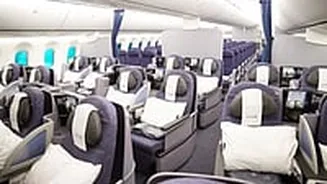
Seat selection fee is often charged by airlines to allow passengers to select their preferred seat. Such fees are generally levied on window seats, aisle seats, seats in the front row, or seats with extra legroom.
The fee usually ranges from Rs 150 to over Rs 2,000 for preferred seats. Indian airlines are currently required to offer at least 20 percent of the total seats without any additional charge.
However, the government in March had asked airlines to allocate at least 60 percent of the seats at no extra cost.
The latest relief has come after the government recently stepped in to shield Indian airlines from the steep rise in the prices of aviation turbine fuel (ATF).
While there has been an increase of over 100 percent in ATF prices, the government has only carried forward 25 percent of the burden to Indian airlines amid the economic impact of the war in West Asia.