





Mumbai: M East, one of the largest wards in the city, has been the subject of several studies. In the 2011 census, the ward had 8,07,720 residents, a number estimated to have crossed a million now. The
ward covers Mankhurd, Shivaji Nagar, Govandi, Cheeta Camp, and Anushakti Nagar, with more than 77% of the population living in slums and informal housing.
Proximity to Deonar dumping ground worsens human development index
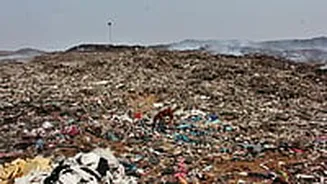
The ward's proximity to the city's largest dumping ground at Deonar, the dense housing, and overcrowded and dysfunctional public health facilities mean that the ward has the lowest human development index (Mumbai Human Development Report, 2009).
A study in 2011 covering 1,20,000 households by a team led by Professor Amita Bhide, with project staff comprising Sabah Khan, Leena Joshi, Neeraj Kumar, and Purva Dewoolkar from the Tata Institute of Social Sciences (TISS), said that the locality is one of the poorest areas in the city. The area's infant mortality rate was around 66.47 per thousand live births, compared to the all-India figure of 44 during 2011. One out of every two children in the ward was malnourished. There were a large number of children between the ages of six and 14 who are not attending school, the study also found. The TISS study noted that child malnutrition levels in the area have been equated to Sub-Saharan Africa and a life that is full of poverty, insecurity, and everyday violence.
A study by Arun Kumar and Annabel Mehta, titled 'Life on the Margin: Charting Realities, Apnalaya Studies Series' said that the average age at death sums up the abysmal state of affairs: it was 39 years in 2016-2017, compared to the average of 70 years for India. India had a life expectancy of 32 in 1947. Most of the M-East ward may seem to be situated on the outskirts of human dignity, the study remarked.
The dumping ground is set to close in phases, but still receives the largest proportion of the city's waste. Shaikh Fayyaz Alam of the Govandi Citizens Welfare Forum stated that the residents, who already belong to socially and economically vulnerable sections, are repeatedly subjected to policies that worsen their insecurity instead of improving their living conditions.
"The continued operation of garbage burning, bio-medical waste treatment facilities, and waste-to-energy plants around Deonar has created a permanent public health emergency. These activities expose residents to long-term risks such as respiratory diseases, skin disorders, and other chronic illnesses, especially affecting children and the elderly," said Shaikh.
The area bears a disproportionate share of diseases. While the number of diarrhoea cases remained stable between 2012-13 and 2016-17 across the city, the numbers almost doubled in M East. While the incidence of diabetes increased by 30% during the period city-wide, the numbers increased by 205% in M East (Apnalaya). A similar disproportionate increase was observed in communicable diseases like malaria.
Civic issues exacerbate residents’ daily hardships
Vicky Misquitta, a resident of M East Ward, said that despite its major health challenges, the ward had only one large public hospital, Shatabdi Hospital, which is insufficient for the large population.
"Very often, doctors are not available, and basic medical facilities are non-functional. X-ray machines and other essential equipment frequently do not work. During emergencies, residents are forced to travel to Chembur or private hospitals, which is costly and risky, especially for the poor and elderly," said Misquitta.
Despite a population that equals a mid-size city, the ward has inadequate government schools or colleges. "Most institutions are private and unaffordable for common residents. Students are compelled to travel to Vashi, Sion, and Wadala for education, causing financial burden, safety concerns, and loss of time," Misquitta said.
Community initiatives and citizen empowerment show signs of progress
Saeed Shaikh, a resident of Shivaji Nagar, Govandi, said that the ward has a shortage of burial grounds, encroachment, illegal constructions, and inadequate healthcare facilities. "A large hospital is almost ready, but awaiting inauguration," said Shaikh. "The ward has the dubious distinction of being top on the list as far as civic issues are concerned."
Air pollution from severe traffic, garbage burning, cement mixing plants, broken sewage lines, waterlogging in monsoon, and inadequate transportation are other issues pointed out by residents. The ward is thus symptomatic of the paradoxes of urban development in the country and its problems are linked to the secondary citizenship of the urban poor, the lack of official recognition of life, the lack of data and knowledge about several processes at work, and patchy solutions that lack accountability and adequate resource support, the TISS study said. This city has failed the people of M-East ward too many times in the past. This once, we hope, history shall not repeat itself, the authors of the study said.
Residents of the area said that in spite of being a part of Mumbai, M East Ward continues to be neglected. "We request the concerned authorities to kindly conduct an immediate survey, take time-bound corrective action, and ensure that residents receive their basic civic rights," said Misquitta.
Residents pointed out that proposals to rehabilitate ineligible Dharavi residents near the Deonar dumping ground amount to environmental and social injustice. "Govandi is being treated as a default relocation site despite already bearing a disproportionate burden of pollution, poor health indicators, and inadequate infrastructure," said Shaikh.
Abid Abbas Sayyed, a lawyer and an activist, said that the ward has been neglected for years. "Residents suffer due to broken roads, chronic water shortages, flooded lanes because of clogged drains, poor garbage management, and lack of quality health facilities. People are forced to live in unsafe conditions. The ward needs urgent, time-bound infrastructure work, transparent use of funds, and serious monitoring by the civic authorities," stated Sayyed.
Collaborative projects improve child health, education, and slum conditions
There is also the impending plan to redevelop the slums into more modern housing. However, residents are sceptical about their views being sought in such projects. Shaikh said that decision-making around redevelopment, waste management, and rehabilitation is often driven by political expediency rather than public interest.
Still, there are signs that the situation could be improving. Apnalaya said that through its citizenship programme, the organisation has been able to equip the citizens of the ward on how to make themselves counted and the government authorities accountable. Autonomous citizen-led initiatives have led to families getting legal water connections, electricity connections, cooking gas, and ration cards, the study said. The people have begun to know how to work with the local government authorities, write applications, file Right To Information (RTI) Act requests, motivate their neighbours, and initiate civic improvements like lane reconstruction, street cleaning, and toilet construction in their communities.
The TISS study said that learnings from these surveys have been immense and have fed into several efforts of transformation. These include the inception of a forum of community leaders; the initiation of a large school mid-day meal programme; and coordination across governmental and non-governmental actions around child health and nutrition, which led to partnerships with the municipal corporation on parameters of slum improvement and the planning of interventions.
A study of Cheeta Camp and Trombay Village by the Harvard Mellon Urban Initiative said that the site has had incremental infrastructural upgrades in the last 30 years, some constructed by the state and some financed privately by residents. The study suggested the opening of disused government green spaces to the public.
Access to transportation and commercial areas is sparse, but utilities such as electricity and telecommunications are readily available. Education is inexpensive for boys and free for girls. Water shortages in recent years have led residents to band together to pay for the installation of additional water lines, the Harvard Mellon Urban Initiative noted. The area will soon be connected to the city's Metro network.
To get details on exclusive and budget-friendly property deals in Mumbai & surrounding regions, do visit: https://budgetproperties.in/