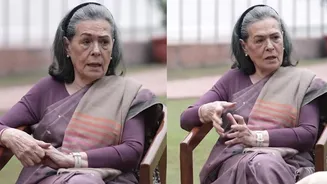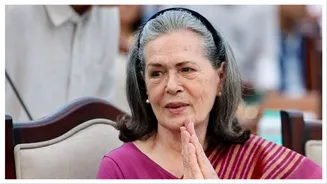









For years, Sonia Gandhi's health remained a closely guarded part of her personal life, with little known publicly about the medical challenges she faced. Now, the Congress Parliamentary Party chairperson
has shared a deeply personal account of her cancer battle in her new memoir, Belonging: A Journey of Love, which hit bookstores across India on November 10. Sonia Gandhi writes about Breast Cancer battle In her memoir, Sonia Gandhi revisits the period when she was diagnosed with breast cancer in 2010, as reported by The Indian Express. Recalling the uncertainty and fear that followed the discovery, she writes about how the news affected her and her children. She describes the emotional moment of arriving at the hospital with daughter Priyanka Gandhi for a medical procedure, writing, “I felt my spirits sink at first as I walked into the dark and gloomy hospital reception as did Priyanka.”
Sonia also explains why she chose to seek treatment away from the media spotlight in India. Although she had confidence in the doctors at Sir Ganga Ram Hospital, she was concerned about the attention a medical procedure in Delhi would attract.
Reflecting on her decision, she wrote, “I felt shaken and worried, there was no time to lose, my children and I were told, and my mind began to race to a possible scary outcome…I wasn’t keen to be at the centre of a media frenzy that would have inevitably accompanied a surgery in Delhi… True I had become a public figure, but did that mean I wasn’t to be allowed even a modicum of privacy?”
She underwent her first surgery in Milan, Italy, under the care of renowned breast cancer specialist Dr Umberto Veronesi. According to accounts from the memoir, the surgeon removed two tumours and also performed intra-operative radiation, helping her avoid five weeks of additional radiotherapy.
The health challenges did not end there. During routine follow-up tests in 2011, doctors reportedly detected a growth in her pancreas. The finding came as another shock to Sonia and her children, leading to a second surgery in Rotterdam, the Netherlands. She was treated by Dr Casper van Eijck, who later informed her that the tumour had been detected at a preliminary stage.
About Breast Cancer
Breast cancer is a condition in which cells in the breast tissue begin growing abnormally and uncontrollably. According to the Mayo Clinic, it most commonly starts in the milk ducts, which carry milk towards the nipple, or in the lobules, the glands responsible for producing milk. Although it is more common in women, men can also develop breast cancer because everyone has breast tissue.
The disease may not always cause noticeable symptoms in its early stages. Some commonly reported signs include a new lump or thickened area in the breast, changes in breast size or shape, nipple inversion, unusual discharge and changes in the skin, such as dimpling, redness or scaling.
The Mayo Clinic notes that not every breast lump or change indicates cancer. However, any new or unusual change should be evaluated by a healthcare professional rather than ignored. Diagnosis may involve a physical examination, imaging tests such as a mammogram and a biopsy to determine whether cancer cells are present.
Treatment depends on the type and stage of the cancer and may involve surgery, radiation therapy, chemotherapy, hormone therapy or targeted medicines. Early detection can help doctors identify the disease and plan appropriate treatment.
Disclaimer: This article is for informational purposes only and should not be considered a substitute for professional medical advice. Always consult your doctor for any concerns or questions regarding your health or medical condition.