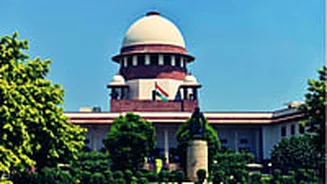

Bail is the rule and jail is the exception, the Supreme Court has consistently held, and a top court bench of Justices Sanjay Kumar and Alok Aradhe reiterated this principle. The right to a speedy trial
enshrined in Article 21 of the Constitution cannot be eclipsed by the nature of the offence, the bench maintained while granting bail to former Amtek Group chairman Arvind Dham, who has been in jail for 16 months in a money laundering case.
Prolonged incarceration amounts to punishment
The court said prolonged jail without a trial beginning has the effect of turning pre-trial detention into punishment. The Supreme Court order came a day after a bench of Justices Aravind Kumar and N.V. Anjaria denied bail to activists Umar Khalid and Sharjeel Imam, who have been in jail for nearly six years in the Delhi riots case under the anti-terror law UAPA (Unlawful Activities Prevention Act).
Contrasting bail rulings under similar laws
Bail provisions in both cases, under the UAPA and the Prevention of Money Laundering Act (PMLA), are similar, as they state that the accused cannot be released on bail if there are reasonable grounds for believing that the accusation against such a person is prima facie true. The court’s order in Dham’s case is contrary to what the bench stated while denying bail to Khalid and Imam, but is in conformity with apex court orders passed earlier in the cases of former Delhi chief minister Arvind Kejriwal, former Delhi deputy chief minister Manish Sisodia, and former Tamil Nadu minister Senthil Balaji.
Delay in trial a key factor
The bench noted that there are 210 witnesses to be examined in the Dham case and there is no likelihood of the trial beginning any time soon. This prolonged incarceration violates the right of the appellant to a speedy trial under Article 21 of the Constitution. In the case of Khalid and Imam, however, the court stressed that each accused must be assessed independently, while granting bail to five others in the case.
Undertrial crisis highlights systemic flaws
That the same court could give such differing judgments reveals the dichotomy dogging the legal system in India. There are nearly four lakh undertrial prisoners in the country, with little hope of justice being meted out to them. A shortage of judges, delays in investigations, and a lack of legal aid due to poverty are the main reasons attributed to prolonged incarceration without trial.
Impact on prisons and undertrials
This leads to overcrowding in prisons and, consequently, terrible living conditions. Undertrials also face mental health issues such as anxiety and depression. That most undertrial prisoners belong to disadvantaged sections of society is a telling commentary on the justice system in the country.
A welcome reaffirmation of constitutional rights
The Supreme Court realising that prolonged incarceration without trial is reason for bail is welcome. The more such cases are dealt with speedily, the better. It is a long haul, but ultimately, justice will be served.