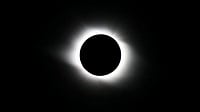





Solar Eclipse, referred to as Surya Grahan, is among the most important astronomical occurrences that happen annually. This will be the second solar eclipse in 2026 as the first solar eclipse in 2026 took
place on February 17, 2026. It was an annular solar eclipse known as the "Ring of Fire," reaching its maximum at 12:12 UTC. The next solar eclipse will take place on August 12, 2026.
After the solar and lunar eclipses in February and March, this solar eclipse will be seen in the month of August. Sky lovers, astrologers, and those interested in astronomy have good news, as this solar eclipse will be of longer duration. While a normal solar eclipse lasts for three minutes, this eclipse is said to last for six minutes and 23 seconds. Let's take a look at where it will be visible in the world.
Where the eclipse will be visible?
The second solar eclipse is set to occur on Wednesday, August 12, 2026. The eclipse will begin at 9:04 PM and end at 4:25 AM on August 13, 2026. Unfortunately, if you are in India and want to watch the celestial event, it won't be visible in India. But it will sweep across mainland Spain for the first time in over a century. The rare event starts near the North Pole and travels all the way down to Spain at sunset, passing through Greenland and Iceland. So, you can watch the total solar eclipse from these locations.
What is a solar eclipse?
A solar eclipse happens when the Moon comes between the Earth and the Sun, obscuring all or some of the Sun's light from reaching Earth. This alignment occurs solely during a new moon. There are three primary categories of solar eclipses: total, where the Sun is entirely hidden; partial, where only part of it is blocked; and annular, where the Moon obscures the center, resulting in a ring effect. Solar eclipses occur infrequently and can be seen only from specific areas of the planet.