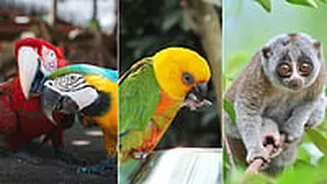

Indore (Madhya Pradesh): With 48 owners across the city document 62 species, from macaws and lories to iguanas, under the Wildlife (Protection) Amendment Act, 2022, Indore led Madhya Pradesh, as the state
outpaced all other states, becoming the first in India to complete registrations for exotic pet ownership within the stipulated timelines.
“A crackdown on undocumented menageries led to 48 owners registering 427 individual animals,” divisional forest officer (DFO) Pradeep Mishra said, “These figures are vital for long-term monitoring, helping authorities track trends and identify risks of illegal trade.” The division has documented 62 distinct species so far.
“Currently, a few pet shops in Indore are legally keeping registered species such as Macaws, Loris, Sun Conures and Iguanas,” Mishra said.
Historical shift: From royalty to regulation
Fascination with exotic companions dates back centuries.
-
* Royal heritage: Mishra noted that Chhatrapati Shivaji Maharaj kept hunting dogs and leopards, while other rulers maintained tigers and lions.
-
* British influence: Exotic species were introduced during British rule. After Independence, British officers gifted pet birds like budgerigars and cockatiels to Indian staff in the early 1950s.
-
* Pre-1972 era: Before the Wildlife (Protection) Act, 1972, it was common to keep native animals like star tortoises, sloth bears, and porcupines as pets.
-
* The loophole: After the 1972 Act protected native wildlife, the preference shifted towards exotic species, which remained outside the purview of Indian law.
Media boom and emerging problems
The trend of exotic pet ownership intensified in the 2000s, heavily influenced by television programmes. This media-driven demand led to iguanas, bearded dragons, snakes, and tarantulas becoming household fixtures.
“Lack of proper laws governing the import and ownership of exotic pets led to illegal trafficking, high mortality rates during smuggling, and inflated prices,” Mishra said.
Exotic animals slowly became a status symbol, while illegal trade emerged as a major conservation challenge, he added.
Currently, some pet shops in Indore legally keep registered species such as macaws, lories, sun conures, and iguanas. “Buying from registered sources is essential, and keeping any CITES-listed species without proper documentation is now illegal,” Mishra emphasised.
Future outlook & threats
Despite improved regulation, the digital frontier presents a new challenge.
-
* Online trade: Mishra identified social media and messaging apps as emerging threats for illegal sales.
-
* Vigilance: Intelligence-based monitoring is required to tackle hidden wildlife trade.
-
* Awareness: Many violations occur because citizens remain unaware of the law.
Mishra also recommended a practical step: “A clear list of CITES-listed species should be circulated and made mandatory for display at all pet shops.”