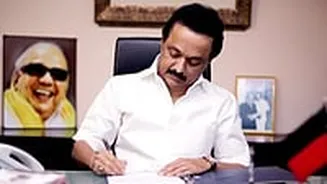

Chennai: Tamil Nadu Chief Minister M K Stalin has written to Prime Minister Narendra Modi expressing “deep urgency and concern” over the 50 per cent tariffs imposed by the United States on Indian exports.
He warned the move has triggered a severe crisis in the State’s export-driven industries, particularly textiles, apparel, leather and footwear .
In his letter, a copy of which was circulated to the media on Thursday, the Chief Minister highlighted Tamil Nadu’s critical role in India’s export economy, noting the State accounts for 28 per cent of the country’s textile and apparel exports and nearly 40 per cent of leather and footwear exports. These sectors together employ around 85 lakh workers, making them vital not just economically but also socially, he said.
According to Stalin, the impact of the tariffs has been especially acute in Tiruppur, known as the Knitwear Capital of India. Exporters there have reportedly lost confirmed orders worth ₹15,000 crore, while production cuts of up to 30 per cent have been enforced across units. New orders are also drying up rapidly, leading to a combined daily revenue loss of ₹60 crore for exporters in Tiruppur, Coimbatore, Erode and Karur districts. Many small and medium enterprises are now on the brink of collapse, he said.
A similar situation is unfolding in footwear clusters across Vellore, Ranipet and Tirupatthur districts, where exporters are struggling to cope with shrinking margins and rising uncertainty. According to the Chief Minister, exporters are being forced to offer deep discounts merely to retain existing buyers, eroding their competitiveness and long-term viability.
Stalin cautioned that the consequences go beyond economics, describing the situation as a looming humanitarian challenge. Layoffs and wage deferrals have already begun, placing lakhs of jobs at risk and threatening the stability of entire communities. He also expressed concern that international buyers are increasingly diverting orders to competing countries such as Vietnam, Bangladesh and Cambodia, which currently enjoy a tariff advantage.
Warning that lost markets are difficult to regain once supply chains shift, he said the developments could have long-term implications for employment, particularly for women and young workers.
Urging swift intervention, Stalin appealed to the Prime Minister to prioritise a resolution of the tariff issue through a bilateral agreement with the United States. An early settlement, he said, would help revive exporters, protect jobs and reinforce India’s standing as a reliable global manufacturing hub.