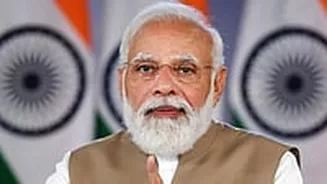









The Narendra Modi government has a well-known fondness for acronyms, and the latest addition to this expanding alphabet soup is SHANTI—the Sustainable Harnessing and Advancement of Nuclear Energy for Transforming
India Bill, 2025. The word may suggest calm and reassurance, but the manner in which the Bill was passed raises questions that are anything but tranquil. Whether such a complex and far-reaching piece of legislation received the scrutiny it deserved is a moot point. Nuclear energy is not just another sector waiting to be “reformed”; it involves risks that are long-term, trans-generational, and potentially catastrophic. The Bill replaces two major laws—the Atomic Energy Act of 1962 and the Civil Liability for Nuclear Damage Act of 2010. Its most significant departure from past policy is the opening up of nuclear power generation to public, private, and joint sector participation. Until now, nuclear energy was the exclusive preserve of the Central government.
Proponents of private sector participation will welcome this as a long-overdue reform. Critics, however, may not find much comfort in the degree of control the Centre proposes to retain. To inspire confidence, the Bill provides for the setting up of an Atomic Energy Regulatory Board and an Atomic Energy Redressal Advisory Council. How independent and effective these bodies will be remains to be seen, especially in a sector where regulatory capture can have disastrous consequences. The SHANTI Bill must also be viewed in the context of the government’s ambitious target of producing 100 GW of nuclear power by 2047—a dramatic leap from the present scenario, where nuclear energy accounts for barely 3 per cent of total power generation. The plan includes commissioning five indigenous nuclear reactors by 2033, signalling a strong push towards nuclear expansion.
The most contentious provision, however, is the cap of Rs 3,000 crore on liability in the event of a nuclear mishap. The figure appears arbitrary. Minister Jitendra Singh, who piloted the Bill, has argued that a dedicated fund would be created and that insurance mechanisms would be put in place. Yet, the amount seems grossly inadequate. As Congress MP Shashi Tharoor pointed out, the Fukushima disaster resulted in damages estimated at $182 billion, while Chernobyl’s costs were about $700 billion. In comparison, Rs 3,000 crore—roughly $400 million—is little more than peanuts. The minister is right in noting that nuclear technology has advanced since 2010 and that newer reactors are smaller and more efficient. But insurance exists precisely to cover the unexpected. On that count, the apprehensions expressed by the Opposition cannot be lightly dismissed. Nuclear energy, by its very nature, should rise above partisan politics. Ideally, such legislation should have been preceded by a wider and deeper debate, involving scientists, nuclear experts, and environmentalists. SHANTI, if it is to live up to its name, demanded nothing less.